GP2 begins, later renamed Formula 2
“GP2 replaced Formula 3000 in 2005 as F1's feeder series, with one car and a Renault-badged V8; it became FIA Formula 2 on March 9, 2017.”
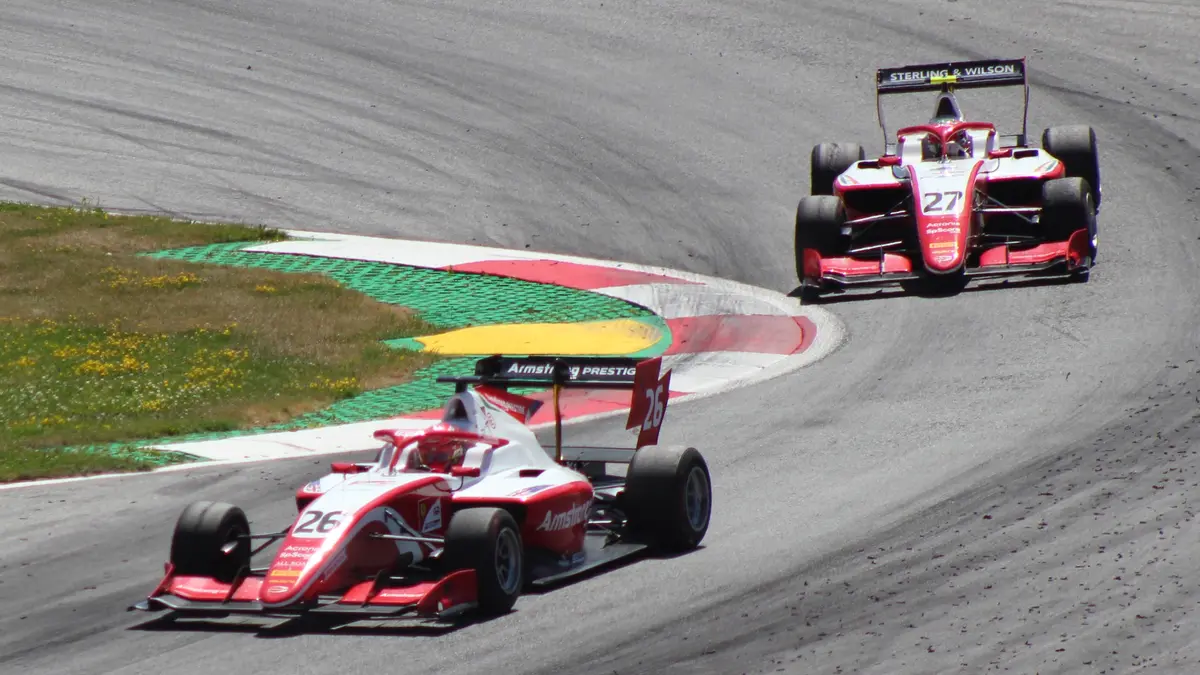
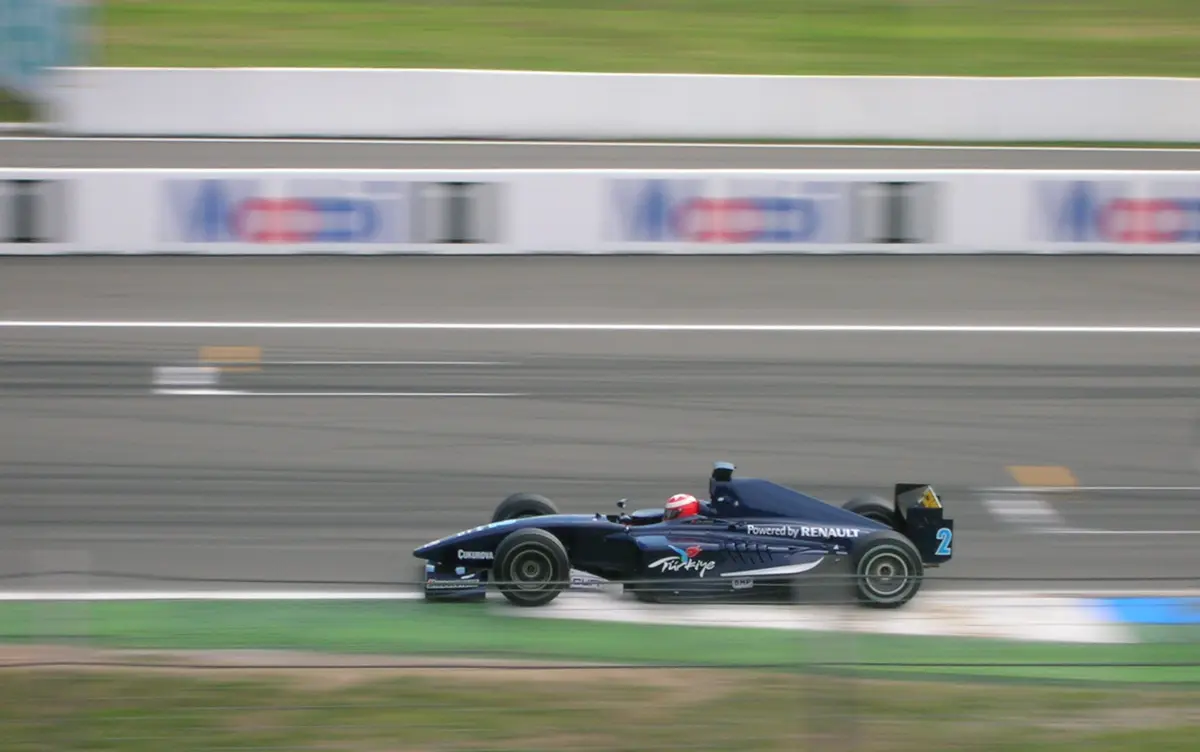
GP2 was the series Formula One built for its own young drivers. It began at Imola in Italy on the weekend of April 23 and 24, 2005, on the same weekend as the San Marino Grand Prix, and replaced International Formula 3000, the feeder series that had run from 1985 to 2004. Bernie Ecclestone, the commercial head of Formula One, and Flavio Briatore, then in charge of the Renault team, conceived it, and Bruno Michel organised it. Every team ran the same car, a Dallara chassis with a 4.0 litre V8 of about 600 horsepower, built by Mecachrome and badged Renault, and the races took place at Formula One weekends in Europe, so that young drivers, engineers and mechanics worked in the same paddock as the big teams.
It was announced in January 2004, because Formula 3000 had become a one-make series with falling entries and was closed after the 2004 season. The FIA acted as its regulator, as it does in Formula One. Dallara delivered the first chassis in February 2005, and the opening weekend at Imola was rough: cars stopped in practice, the pole man Nicolas Lapierre did not start the feature race, which began behind the safety car, and Heikki Kovalainen of Arden won the first GP2 race on Saturday. The next day, in the reversed-grid sprint race, Adam Carroll won.
Its job was to be the last step before Formula One, and it worked. Nico Rosberg won the first title in 2005 and Lewis Hamilton the second in 2006; Hamilton took it at Monza on a disallowed fastest lap, a single point that decided the title. Nico Hulkenberg won in 2009, the first title decided before the last round, Stoffel Vandoorne in 2015 and Pierre Gasly in 2016. Ten of the twelve GP2 champions raced in Formula One, and by 2017 about thirty drivers had come from the series, among them Rosberg, Hamilton, Hulkenberg and Vandoorne.
The series changed in small steps while it kept its shape. Dallara brought a new car for 2008 and again for 2011, Pirelli replaced Bridgestone as tyre supplier in 2011, and a winter sister series, GP2 Asia, ran from 2008 to 2011 before it was merged into the main series. The grid was mostly small private teams, all running the same car.
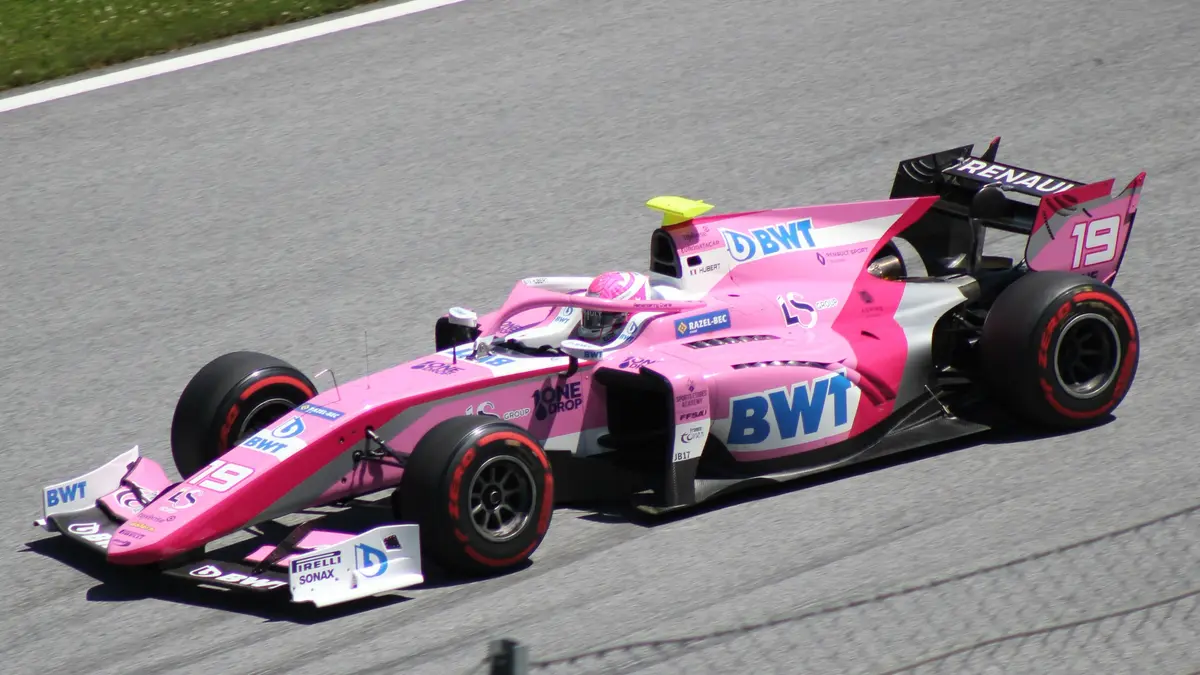
On March 9, 2017, after an agreement between the FIA and the Formula One Group, then owned by Liberty Media, the GP2 Series was renamed the FIA Formula 2 Championship. The FIA wanted a single, clear ladder from karting to Formula One; the new name, which revived the old Formula Two, was the last step of that plan. The 2017 season used the same car; Charles Leclerc, a Ferrari junior, was the first champion in October, and a new Dallara car with a turbocharged V6 and the halo followed in 2018.
What happened
- 2004
The organisers announce the end of the International Formula 3000 and the start of a new series for 2005, called Formula GP2. It will replace F3000 at the European Formula One weekends, with a chassis built by Dallara and a 600 horsepower Renault V8, and the FIA as its technical and sporting regulator. Bernie Ecclestone says it will be 'a very good way for drivers, engineers and mechanics to break into Formula One'. The month is certain; the day is not.
Dallara Automobili, Varano de' Melegari, near Parma, Italy: the company that designed and built the GP2/05 chassis and every GP2 car after itIn the early summer the French Formula Renault 2.0 champion Loic Duval makes the first shakedown of the new car at Circuit Paul Ricard in southern France, rather than at Dallara's own test track near Parma. Formula Scout does not give the year in so many words; it is placed here because the first chassis were delivered only in February 2005.
Circuit Paul Ricard, Le Castellet, France: where the first GP2 car was shaken down in the summer of 2004, by Loic Duval- 2005
The first Dallara GP2/05 chassis are delivered to the teams. All twelve teams will run the same car with the same 4.0 litre V8 engine, built by Mecachrome and badged Renault, and the same brakes at the start; the brief to Dallara was a car much closer to a Formula One car than F3000 had been.
Dallara Automobili, Varano de' Melegari, near Parma, Italy: the company that designed and built the GP2/05 chassis and every GP2 car after itQualifying for the first GP2 race at Imola, on the San Marino Grand Prix weekend. Nicolas Lapierre of Arden takes the first GP2 pole in 1 minute 33.505, five thousandths of a second ahead of Giorgio Pantano; the cars are plagued by electrical faults and only 18 of 24 drivers set a time in practice.
The Autodromo Enzo e Dino Ferrari, Imola, Italy: the circuit of the first GP2 weekend, April 23 and 24, 2005, as drawn in OpenStreetMap todayThe first GP2 feature race, 37 laps, begins. Pole man Lapierre's car leaks oil as it leaves the garage and he does not start, and because of worries about the clutches the race begins with a single-file rolling start behind the safety car. Heikki Kovalainen of Arden wins, 6.802 seconds ahead of Jose Maria Lopez of DAMS, with Scott Speed third; only 11 cars finish on the lead lap.
The Autodromo Enzo e Dino Ferrari, Imola, Italy: the circuit of the first GP2 weekend, April 23 and 24, 2005, as drawn in OpenStreetMap todayThe first sprint race, 17 laps with a reversed grid, is won by Adam Carroll of Super Nova, who climbs from fourth on the grid; Alexandre Premat of ART is second and Kovalainen third. Lapierre, who had not started the feature race, sets the fastest lap after only a few laps and ends the weekend seventh in the championship.
The Autodromo Enzo e Dino Ferrari, Imola, Italy: the circuit of the first GP2 weekend, April 23 and 24, 2005, as drawn in OpenStreetMap todayAt the stand-alone finale at Bahrain, Nico Rosberg of ART Grand Prix wins the feature race from pole position and becomes the first GP2 champion; Heikki Kovalainen, his rival, finishes third. ART takes the teams' title. He moves to Williams in Formula One for 2006.
Bahrain International Circuit, Sakhir: the stand-alone finale of 2005 where Nico Rosberg won the first GP2 title, September 29, 2005- 2006
Nico Rosberg, the GP2 champion, makes his Formula One debut for Williams at the Bahrain Grand Prix, starting 12th and finishing 7th.
Bahrain International Circuit, Sakhir: the stand-alone finale of 2005 where Nico Rosberg won the first GP2 title, September 29, 2005At Monza Giorgio Pantano wins the feature race and sets what looks like the fastest lap, but the stewards disallow the lap because of yellow flags, a decision that comes hours after the finish. The fastest lap and its extra point go to Lewis Hamilton of ART, who is third in the race, and his lead over Nelson Piquet Jr grows to seven points. Piquet could now only tie him the next day, and Hamilton would win the title on count-back. Hamilton is the second GP2 champion and is expected at McLaren.
Autodromo Nazionale Monza, Italy: where Lewis Hamilton took the 2006 title on September 9, 2006 and Nico Hulkenberg the 2009 title on September 13, 2009- 2007
Lewis Hamilton, the 2006 GP2 champion, finishes third on his Formula One debut for McLaren at the Australian Grand Prix in Melbourne, starting fourth.
- 2008
The Dallara GP2/08 replaces the first car, and the series starts a winter sister series, GP2 Asia, announced at the Monaco round of 2007, with five two-race meetings from January to April, some on the same weekends as Formula One in Bahrain and Malaysia. It runs for four seasons, 2008, 2008-09, 2009-10 and 2011.
- 2009
At Monza, one round before the end, Nico Hulkenberg of ART takes third place in Sunday's sprint race and secures the 2009 title, which he wins by 25 points over Vitaly Petrov: the first time a GP2 title is decided before the last round. ART takes the teams' title the following weekend at Algarve.
Autodromo Nazionale Monza, Italy: where Lewis Hamilton took the 2006 title on September 9, 2006 and Nico Hulkenberg the 2009 title on September 13, 2009- 2010
Nico Hulkenberg, the 2009 GP2 champion, makes his Formula One debut with Williams at the Bahrain Grand Prix, starting 13th and finishing 14th.
- 2011
The 2011 season opens at Istanbul Park, Turkey, with the new Dallara GP2/11 chassis and a change of tyre supplier from Bridgestone to Pirelli for 2011 to 2013, which Pirelli kept until the end. The GP2/11 and its 4.0 litre V8 are the car of the series until 2017.
GP2's chief executive Bruno Michel announces that GP2 Asia will be merged into the European series after the 2011 season; one series, with the same teams and drivers, runs from March 2012 and opens in Malaysia on March 24.
- 2016
Stoffel Vandoorne, the 2015 GP2 champion with ART, makes his Formula One debut for McLaren at the Bahrain Grand Prix, standing in for the injured Fernando Alonso, and finishes tenth to score a point on his first start.
At the Yas Marina Circuit in Abu Dhabi the last GP2 weekend ends with Pierre Gasly of Prema becoming the last champion of the GP2 name, although he is only ninth in the sprint race, enough after his win on the Saturday to beat his team mate Antonio Giovinazzi. Alex Lynn wins the last GP2 race; Prema win the teams' title in their first season.
Yas Marina Circuit, Abu Dhabi: the last GP2 weekend, November 26 and 27, 2016, where Pierre Gasly won the last GP2 title- 2017
The FIA, after an agreement with the Formula One Group under its new owner Liberty Media, announces at a World Motor Sport Council meeting in Geneva that the GP2 Series becomes the FIA Formula 2 Championship for 2017, with the same car. It will support ten of the season's 20 Grands Prix and run a stand-alone round at Jerez in October. Bruno Michel stays as chief executive. The first F2 champion is Charles Leclerc, on October 7, 2017.