Ibn al-Haytham's Book of Optics
“A seven-part book finished in Cairo between 1028 and 1038 argued, with experiments, that we see because light comes into the eye; in Latin, from about 1200, it taught Europe optics until Kepler.”
Around the year 1030, in Cairo, a scholar from Basra finished a book in seven parts on one question: how do we see? The scholar was Ibn al-Haytham, called Alhazen in the West, who was born in Basra about 965 and lived in Egypt under the Fatimid caliphs. The book is the Kitab al-Manazir, the Book of Optics. The Greeks had given two answers. Some said light comes from objects and enters the eye; others, including the geometers who had written on optics, said rays go out from the eye to touch what we look at. Ibn al-Haytham took the first answer and tested it. Bright light hurts the eye, and after you stare at a flame you still see it in a dim room, so the eye is receiving something, not sending it. The rays that carry colour and light travel from each point of an object into the eye, he wrote, and the geometers' rays from the eye were a convenient way to draw, not a physical fact.
The date in the base list, 1011 to 1021, belongs to a story rather than to the book. The story, told by the biographer al-Qifti, says that the Fatimid caliph al-Hakim called Ibn al-Haytham to Egypt to control the flooding of the Nile. The scholar travelled up the river, saw that his plan could not work, feared the caliph's anger and pretended to be mad, and so lived shut in his house until al-Hakim died in 1021. After that, the story goes, he lived near the Azhar mosque, taught, and earned his living by copying manuscripts. Modern historians treat the tale with care, and the best-supported date for the Optics is later: it was finished between 1028 and 1038. Ibn al-Haytham himself drew up lists of his works in 1027 and 1028; he seems to have written some 92 books, of which more than 55 survive.
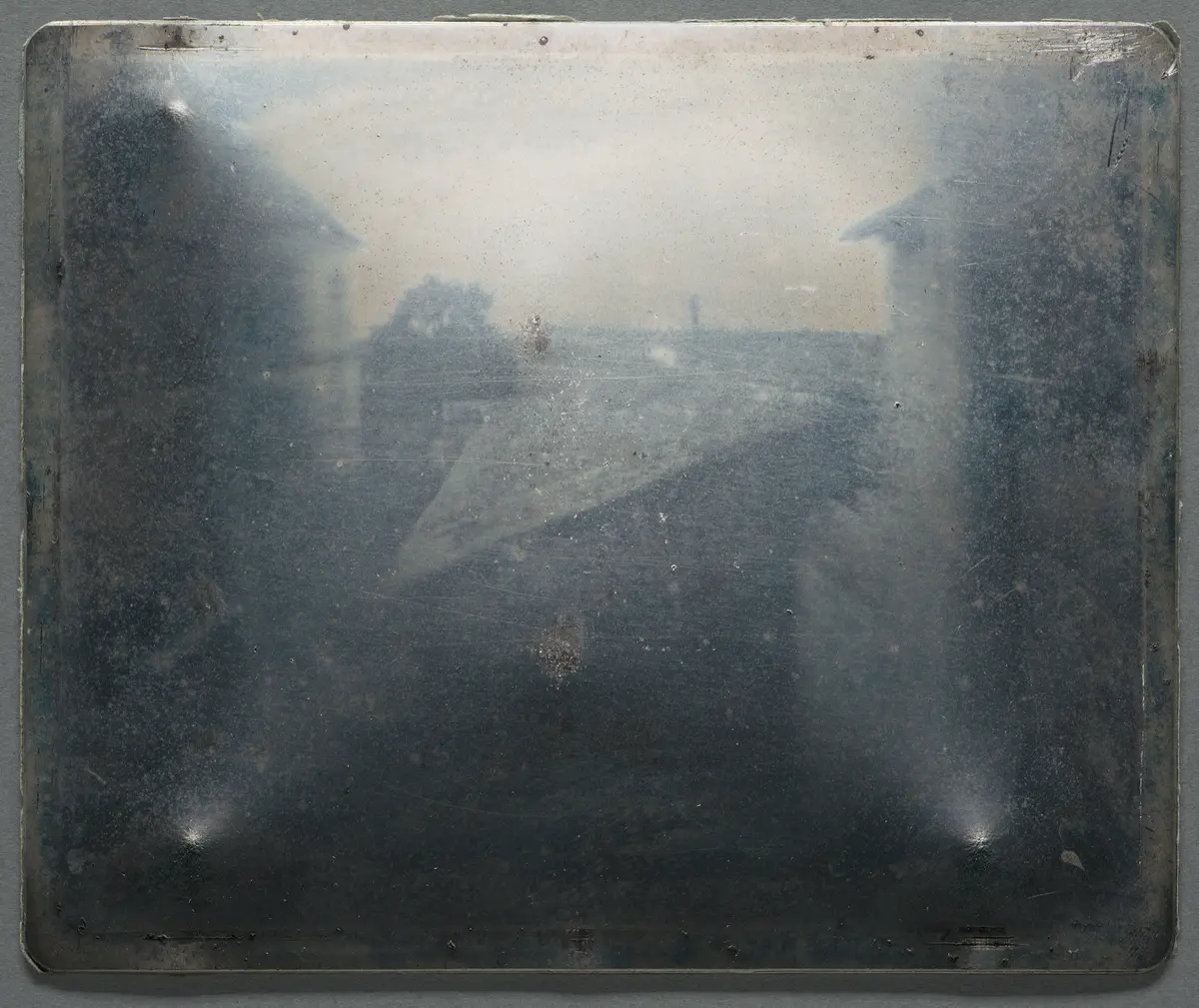
The seven books move from the eye to the world. The first covers the nature of light and the structure of the eye; the next two cover direct vision and its errors; the fourth and fifth cover reflection, with a metal instrument for measuring how light bounces from flat, round and conical mirrors, and the problem that now carries his name (where on a curved mirror must light from one point reflect to reach another?); the sixth covers mistakes of sight in mirrors; the seventh covers refraction, and led him to argue that the air has a limited depth and to explain twilight. He also described the camera obscura, the dark room with a small hole that throws an image of the outside onto a wall. His account of the eye was wrong in one big way: he thought the lens was the part that senses the image, and he had no idea that it works as a lens.
The book travelled. Arabic readers such as al-Farisi, who revised it in the early 14th century, kept it alive in the Islamic world. Around 1200 two translators rendered it into Latin as De aspectibus, under the author's Latinised name Alhacen, and it became the base of European optics: Roger Bacon, John Pecham and Witelo built on it. In 1572 Friedrich Risner printed it in Basel as the Opticae thesaurus, and gave the author the name Alhazen that stuck. In 1604 Kepler, who wrote his optics as a supplement to Witelo's, replaced its theory of the eye with the picture we now use, an upside-down image formed on the retina; Hevelius's moon atlas of 1647 shows Alhazen on a pedestal beside Galileo. In the 20th century Abdelhamid Sabra edited the Arabic text and translated Books I to III; his translation of Books IV and V was published in 2023, after his death. The book is why Ibn al-Haytham is so often called a founder of experimental science, and a reminder that the Arabic-language scientists were more than carriers of Greek ideas.
What happened
- 1021
The caliph al-Hakim dies. In the biographer al-Qifti's story, which MacTutor retells, the Fatimid ruler had called Ibn al-Haytham to Egypt to control the Nile's flood; the scholar, finding the plan impossible, pretended to be mad and was confined to his house until the caliph's death, when he showed that he had been pretending. He is then said to have lived near the Azhar mosque, teaching and copying books.
Cairo, the Azhar mosque: where the Optics was written, and where he is said to have lived near the mosque and copied books - 1024
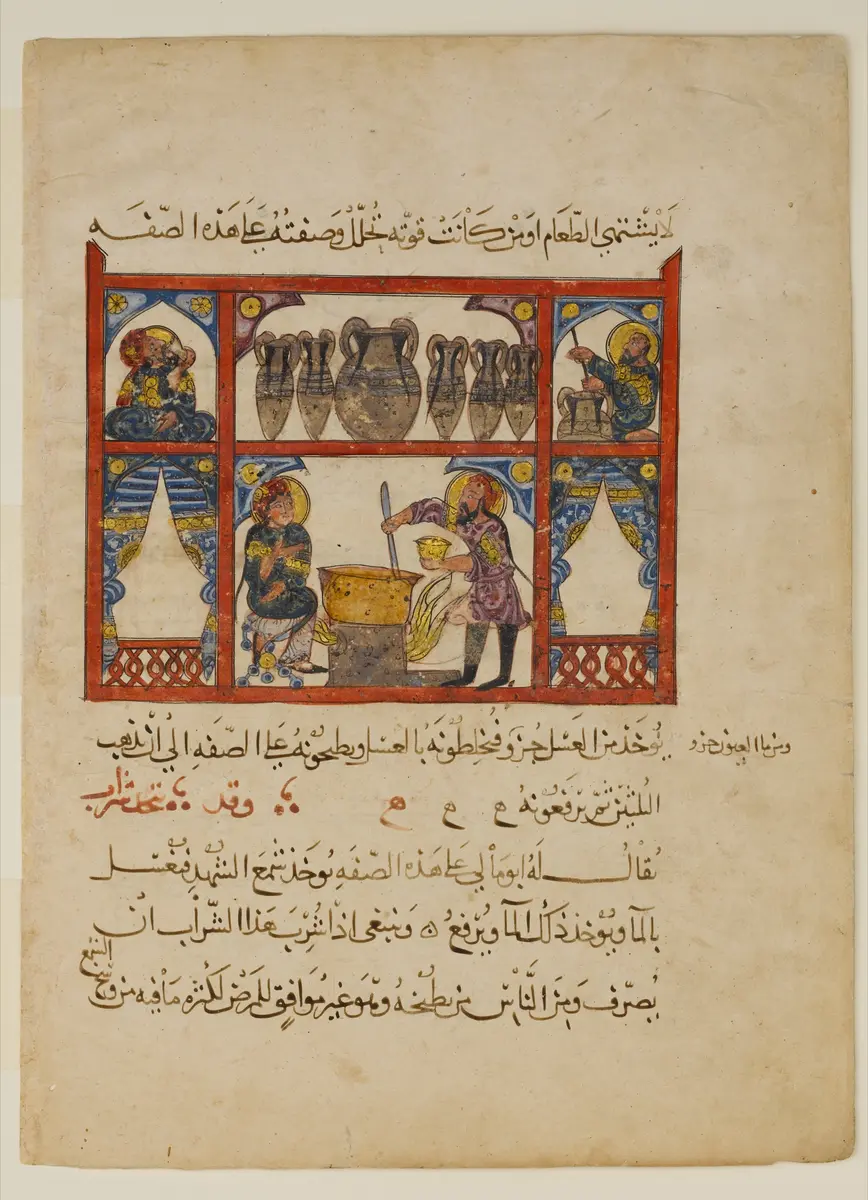
Ibn al-Haytham copies Apollonius's Conics in the Banu Musa version; the manuscript, dated 1024, survives in Istanbul. It shows that he earned his living, and kept up his mathematics, as a copyist in these years.
- 1027
He writes an autobiography, which survives but says little about events in his life and speaks mainly of his intellectual development, and draws up a first list of his own works: 25 books on mathematics and 44 on physics and metaphysics.
Cairo, the Azhar mosque: where the Optics was written, and where he is said to have lived near the mosque and copied books - 1028
He adds a second, supplementary list of his writings. The Book of Optics is thought to have been finished in the decade that begins in this year.
- 1038
By the end of the decade 1028-1038 the Kitab al-Manazir, the Book of Optics, is complete in seven books: the eye, direct vision, reflection, images in mirrors, refraction and false images. Reports also place Ibn al-Haytham in Egypt in this year.
Cairo, the Azhar mosque: where the Optics was written, and where he is said to have lived near the mosque and copied books - 1040
Ibn al-Haytham dies in Cairo, about this year (sources give 1038, 1039 or about 1040).
Cairo, the Azhar mosque: where the Optics was written, and where he is said to have lived near the mosque and copied books - 1200
Around this year the Optics is translated into Latin, as De aspectibus, by two translators, one close to the Arabic and one a summary; the first three chapters of Book I are left out. Its author is named Alhacen in the Latin manuscripts.
- 1270
In the later 13th century the Latin Optics becomes the base of Western optics: Roger Bacon, John Pecham and Witelo write on it; Witelo's own revision follows. The year is a marker only; the sources give the men's lives, not the dates of their books.
- 1309
In the East, Kamal al-Din al-Farisi finishes his autograph copy of the Tanqih al-manazir, the 'Revision of the Optics', dated 708 AH (1309), which revises Ibn al-Haytham's book, drawing also on Euclid, Ptolemy, Aristotle and Galen.
- 1572
The Basel press of Nicolaus and Eusebius Episcopius prints the Latin text as the Opticae thesaurus, edited by Friedrich Risner and dedicated to Catherine de' Medici; the title gives the author as Alhazen, the form that spread from this book.
Basel: where Friedrich Risner's edition of 1572 was printed by the Episcopius press - 1604
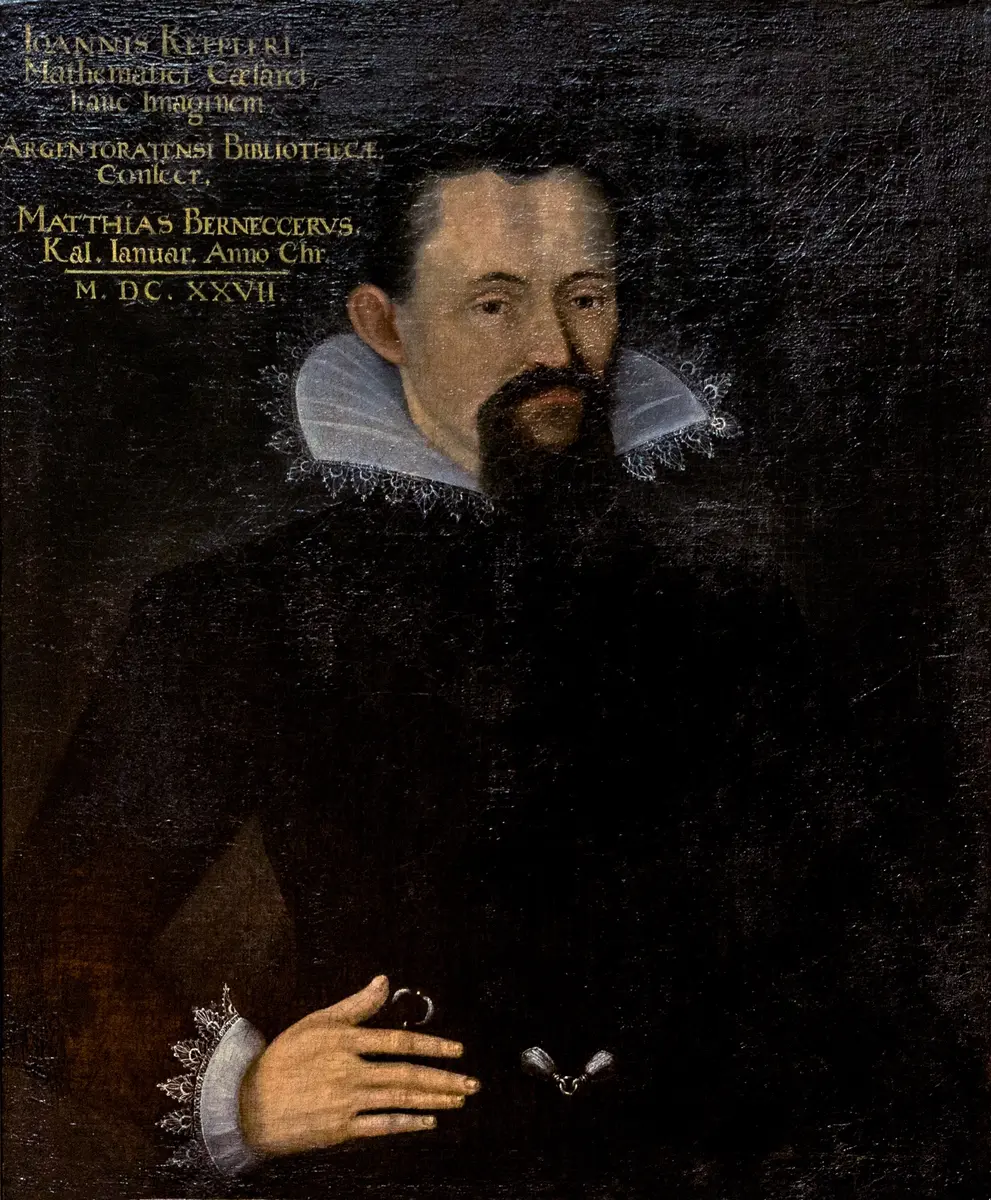
Kepler publishes Ad Vitellionem paralipomena, 'what is added to Witelo', a book of optics which works out that the lens only focuses light and that an upside-down image forms on the retina, the answer that replaces Alhacen's theory of the eye but keeps his intromission of light.
- 1647
Johannes Hevelius's Selenographia, the first atlas of the Moon, opens with a frontispiece in which Alhazen, with reason, and Galileo, with the senses, stand on either side of the title.
- 1983
Abdelhamid Sabra's critical edition of the Arabic text of Books I-III is published in Kuwait by the National Council for Culture, Arts and Letters.
- 1989
Sabra's English translation and commentary of Books I-III, The Optics of Ibn al-Haytham, appears at the Warburg Institute, London, where he had been a fellow and teacher in 1962-72.
London, the Warburg Institute: published Sabra's translation in 1989 and, with the University of London Press, Books IV-V in 2023 - 2001
A. Mark Smith publishes a critical edition and translation of the first three books of the Latin De aspectibus, Alhacen's Theory of Visual Perception, in the Transactions of the American Philosophical Society.
- 2002
Sabra's edition of the Arabic text of Books IV and V is published in Kuwait.
- 2013
Abdelhamid Sabra dies, leaving a translation of Books IV and V unpublished.
- 2023
The Warburg Institute in London hosts the launch of Sabra's translation of Books IV and V, revised by Jan Hogendijk and published with the University of London Press; Sabra had left the translation unfinished at his death, and Hogendijk prepared it for the press.
London, the Warburg Institute: published Sabra's translation in 1989 and, with the University of London Press, Books IV-V in 2023