Abraham Ortelius
“The Antwerp map dealer (1527-1598) who made the Theatrum Orbis Terrarum of 1570, the first modern atlas, and named every maker he borrowed from.”
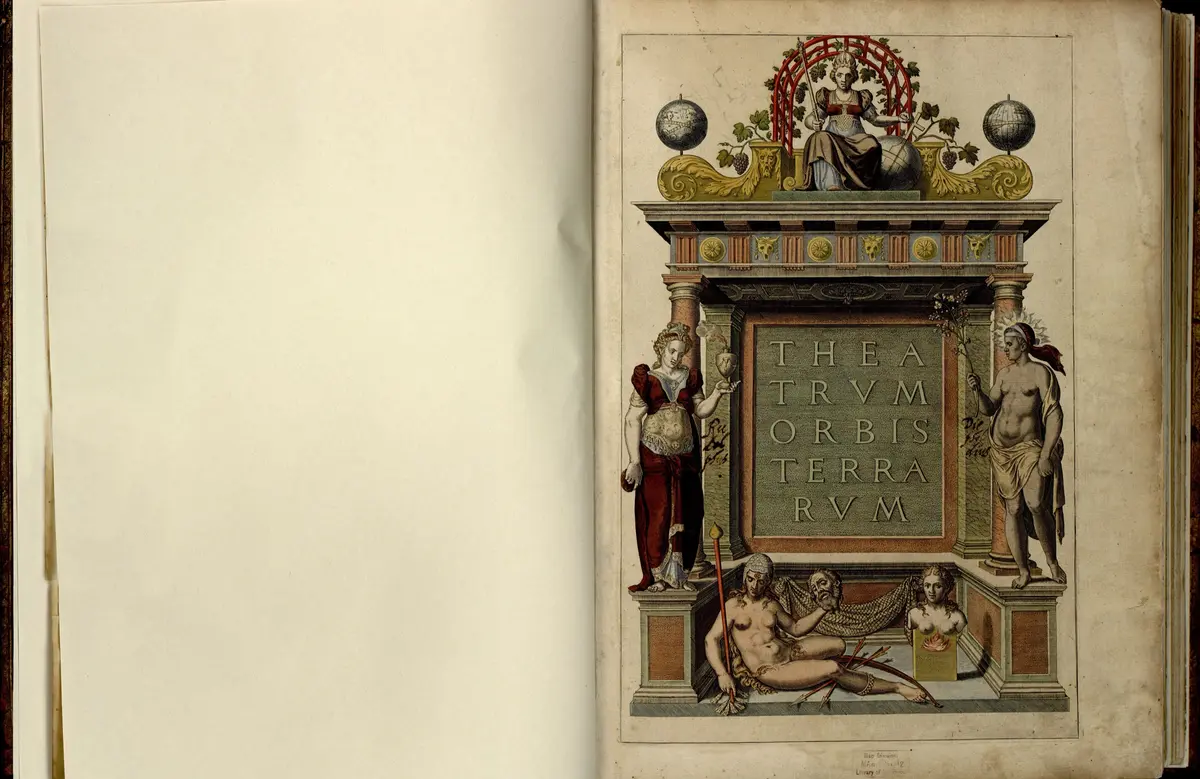
Abraham Ortelius was a map dealer from Antwerp who became the best-known geographer of his age after Gerard Mercator. He made the Theatrum Orbis Terrarum of 1570, the 'Theatre of the World', a bound book of maps all of one size, each with a page of text on its back and a list of the 87 map-makers he had borrowed from. It is called the first modern atlas, and he spent the rest of his life enlarging it.
He was born in Antwerp in April 1527, into a family that came from Augsburg. His father died while he was a boy, and the family kept going by selling antiques; Abraham and his sisters coloured maps by hand. In 1547 he was admitted to the Antwerp guild of St Luke as an illuminator of maps. He went on buying, colouring and selling maps, prints and books, and travelled to the Frankfurt book fair every year. He never married and had no children.
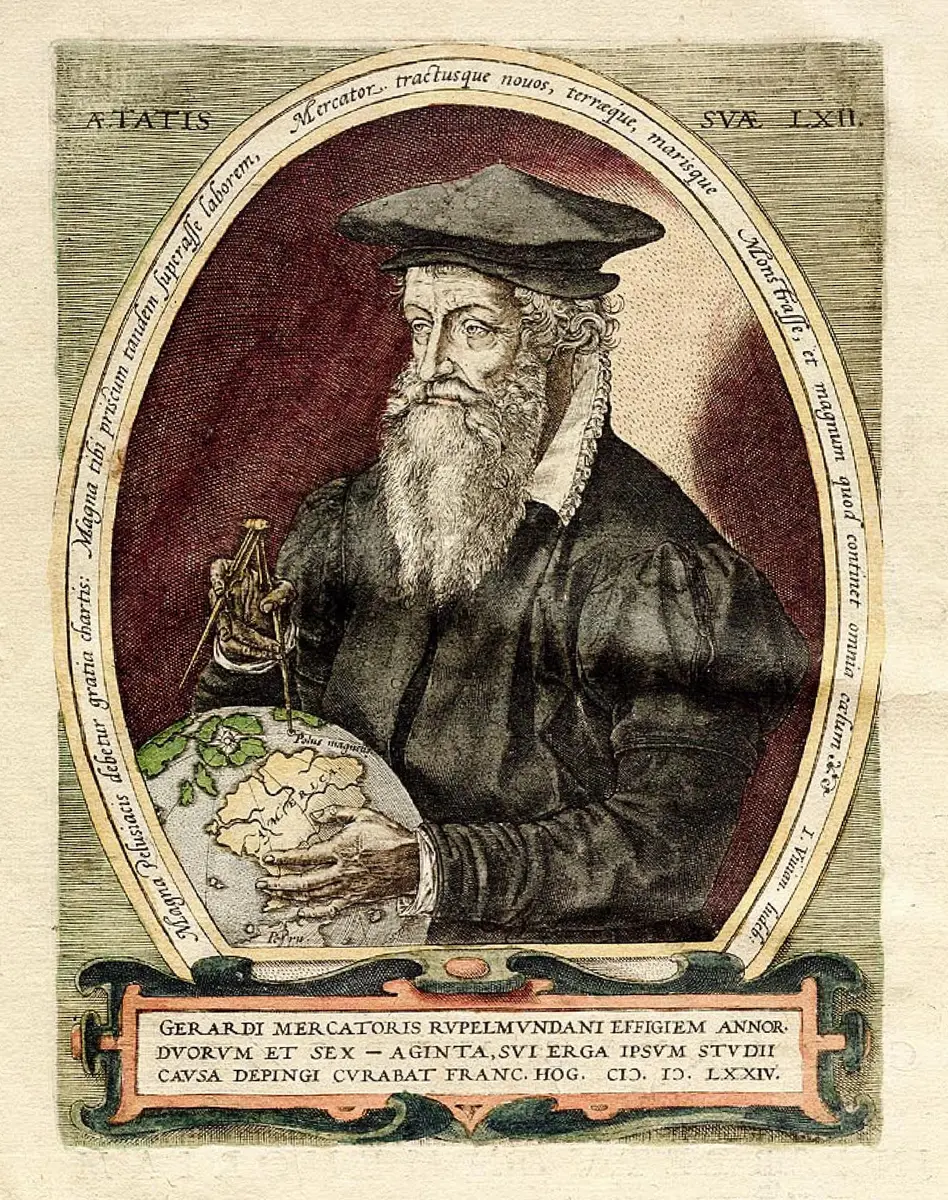
The turning point came in 1560, when he travelled with Mercator through Trier, Lorraine and Poitou and was drawn towards scientific geography. He published a large world map in 1564, then maps of Egypt, Asia and Spain, and in 1570 the Theatrum. It sold so well that it appeared in Dutch, German, French, Spanish, Italian and English, with supplements adding more and more maps. It brought him the title of geographer to Philip II of Spain, and the money for journeys to Germany, Italy, England and Ireland, where he met scholars such as John Dee.
Ortelius was a collector and scholar as much as a mapmaker. He gathered ancient coins and published them in 1573, kept an album of signatures, drawings and verses from his friends, and wrote works on ancient geography: the Synonymia and then the Thesaurus Geographicus, and the Parergon, a set of maps of the ancient world. In the Thesaurus of 1596 he noticed that the coasts of the Americas fit those of Europe and Africa, and wondered whether they had been torn apart, an idea that scientists took up again only in the twentieth century.
He died in Antwerp in the summer of 1598 and was buried in the church of St Michael's Abbey, with an epitaph said to be by his friend Justus Lipsius: 'he lived quietly, without quarrel, wife or child'. People remember him for the atlas, and for the habit of naming his sources. The event of 1570 has its own entry; here are the man, his friends and his other work. The notes say where sources differ on his birth and death days.
What happened
- 1527
Abraham Ortelius is born in Antwerp, the son of a well-off dealer in antiques whose family came from Augsburg.
Antwerp: where Ortelius was born, lived, worked and died- 1547
He is admitted to the Antwerp guild of St Luke as an illuminator of maps and starts to earn his living colouring and selling maps made by others.
Antwerp: where Ortelius was born, lived, worked and died - 1554
He meets Gerard Mercator at the Frankfurt book fair, which he visits every year to buy and sell maps and books.
Frankfurt am Main: the book fair he visited every year, where he met Mercator - 1560
He travels with Mercator to Trier, Lorraine and Poitou; the friendship draws him from trade towards scientific geography.
Trier: on the journey of 1560 with Mercator to Trier, Lorraine and Poitou - 1564
He publishes his first map, an eight-sheet map of the world; only one copy survives, in Basel.
Antwerp: where Ortelius was born, lived, worked and died - 1568
He publishes a plan of the ruins of the Roman fort Brittenburg on the Dutch coast, after maps of Egypt (1565) and Asia (1567).
Antwerp: where Ortelius was born, lived, worked and died - 1570
The Theatrum Orbis Terrarum, 53 sheets of maps in one size, is issued in Antwerp at his own cost.
Antwerp: where Ortelius was born, lived, worked and died- 1572
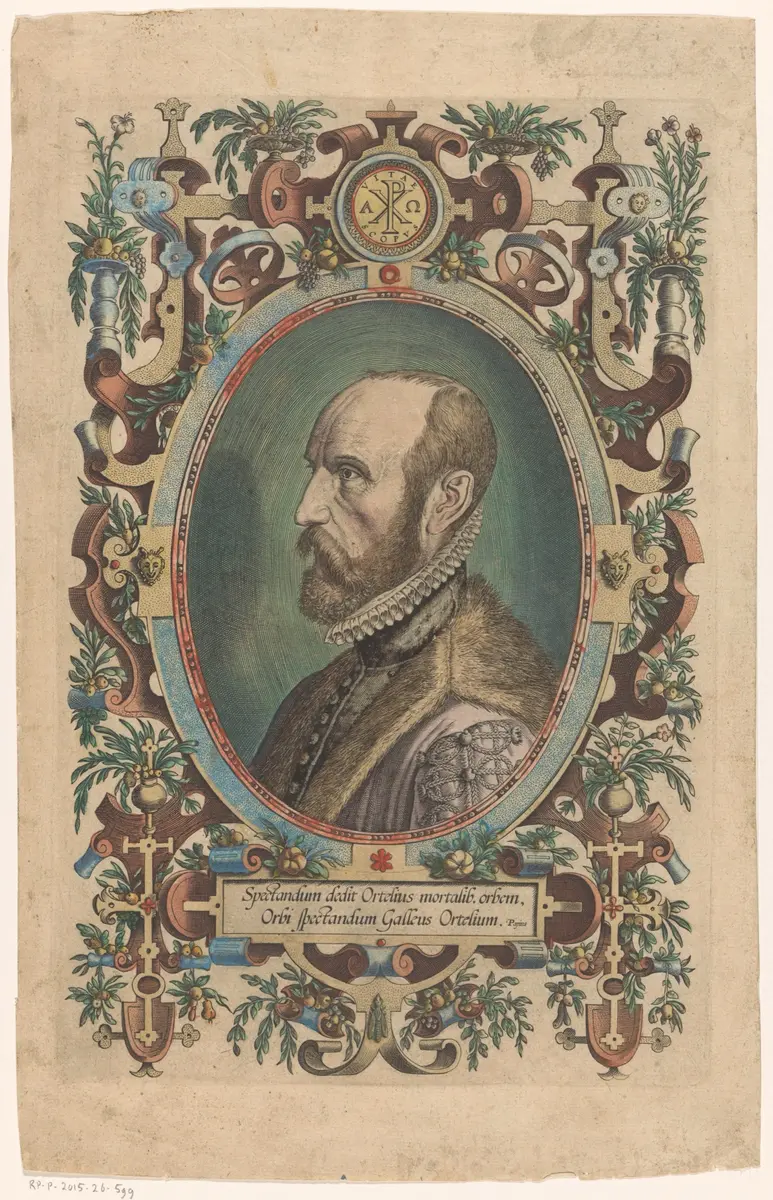
Philips Galle engraves his portrait, the likeness later copied in the atlas of 1579.
Antwerp: where Ortelius was born, lived, worked and died - 1573
He adds 17 maps in a supplement, the Additamentum, and publishes drawings of the ancient coins in his own collection.
Antwerp: where Ortelius was born, lived, worked and died - 1574
The first entries are made in his Album amicorum, a book of drawings, portraits and verses from friends that he adds to until he dies.
Antwerp: where Ortelius was born, lived, worked and died - 1575
He is named geographer to Philip II of Spain, on the word of Arias Montanus that his faith is sound.
Antwerp: where Ortelius was born, lived, worked and died - 1577
He visits England and Ireland and meets John Dee at Mortlake, William Camden and Richard Hakluyt.
Mortlake: the home of John Dee, whom he visited on his English journey of 1577 - 1578
He publishes the Synonymia geographica, a dictionary of ancient and modern place names, with Plantin, and travels to Italy.
Antwerp: where Ortelius was born, lived, worked and died - 1579
The edition of 1579 prints Galle's portrait of him for the first time and carries his Nomenclator Ptolemaicus.
Antwerp: where Ortelius was born, lived, worked and died - 1584
He publishes the Parergon, maps of ancient history, and the Itinerarium of his journey through the Low Countries and the Rhineland.
Antwerp: where Ortelius was born, lived, worked and died - 1589
He adds Maris Pacifici, a map of the Pacific Ocean, to the Theatrum.
Antwerp: where Ortelius was born, lived, worked and died - 1591
He publishes a bird's-eye view of the Escorial, Philip II's palace and monastery, dedicated to the king.
Antwerp: where Ortelius was born, lived, worked and died - 1593
His friend Joris Hoefnagel draws the allegory of their friendship, with the two of them as butterflies.
Antwerp: where Ortelius was born, lived, worked and died - 1596
The last Thesaurus Geographicus says the Americas look torn from Europe and Africa; Antwerp honours him with a public gift.
Antwerp: where Ortelius was born, lived, worked and died - 1598
Ortelius dies in Antwerp and is buried in St Michael's Abbey, with the epitaph 'Quietis cultor sine lite, uxore, prole'.
Antwerp: where Ortelius was born, lived, worked and died