Herschel discovers infrared light
“In 1800 William Herschel found that a thermometer placed just beyond the red end of a prism's spectrum, where no light is visible, warmed most of all: invisible rays he called calorific rays, now called infrared.”
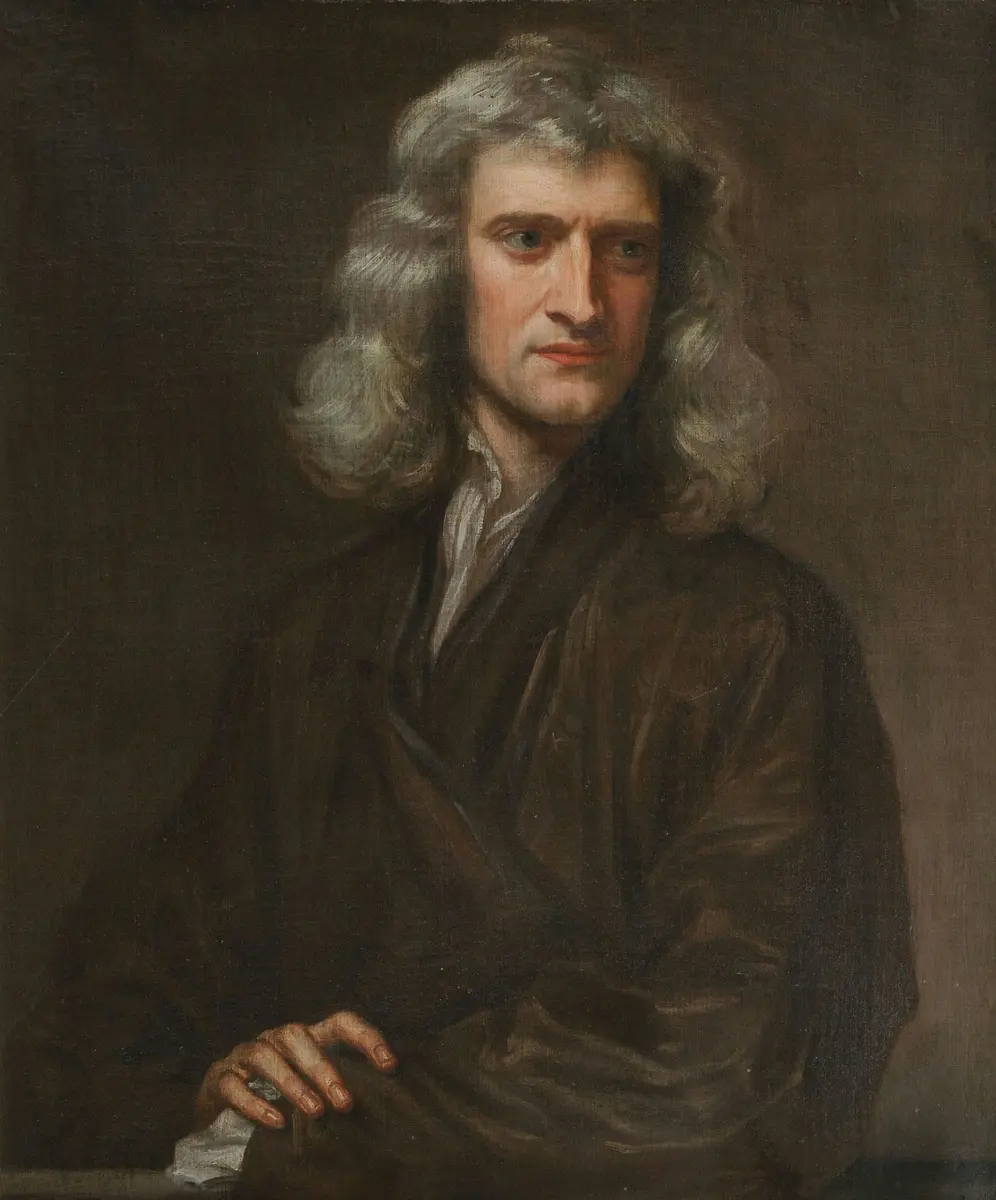
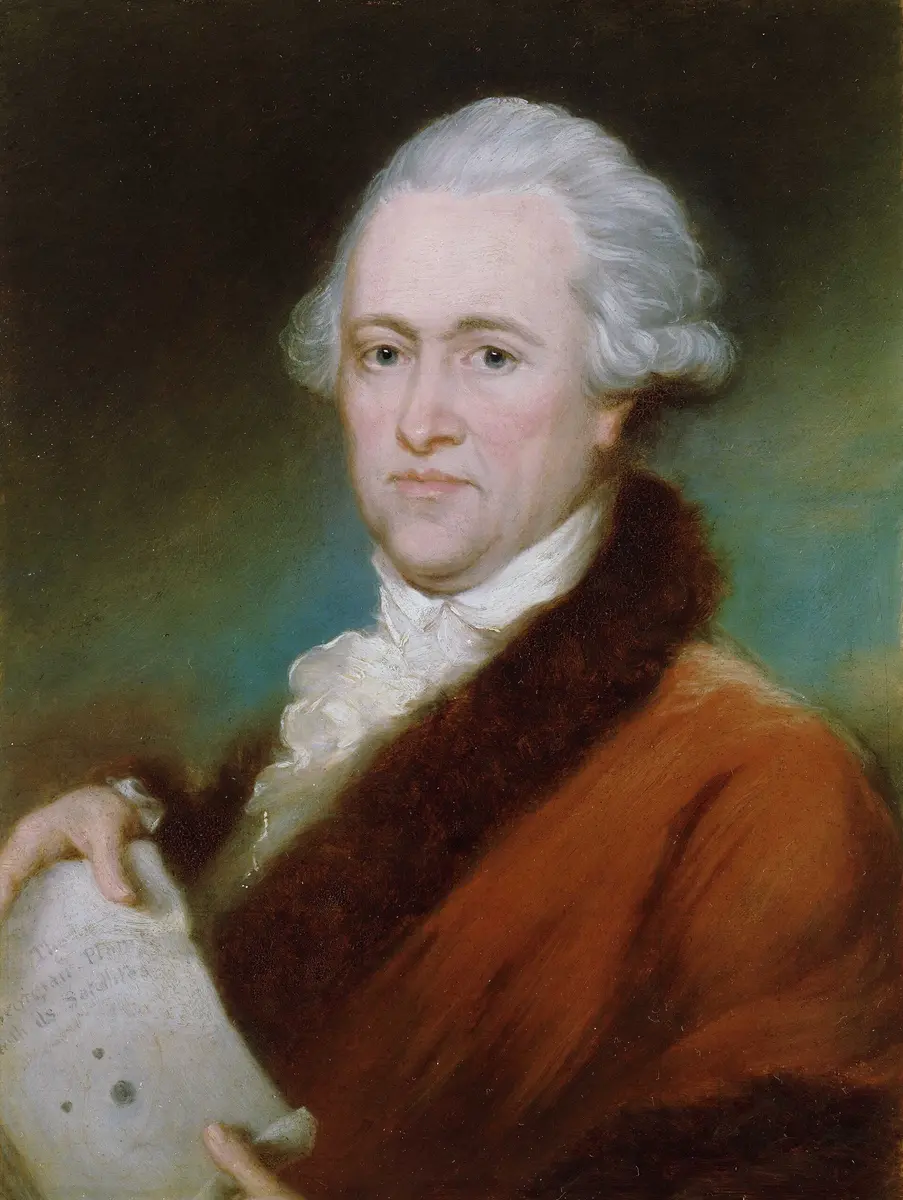
William Herschel was 61 in 1800 and already famous as the man who found the planet Uranus. He lived at Slough, near Windsor, as the astronomer of King George III, and he was looking for a comfortable way to look at the Sun through his big telescopes. He tried darkening glasses of different colours and noticed something odd: some glasses let through a lot of heat but little light, while others gave plenty of light and hardly any heat. So he asked a simple question. Does every colour of sunlight carry the same amount of heat? In early 1800 he set up a prism in an open window, let the rainbow fall on a table, and put three thermometers with blackened bulbs next to it. Two stayed in the shade as controls, and one was moved from colour to colour.
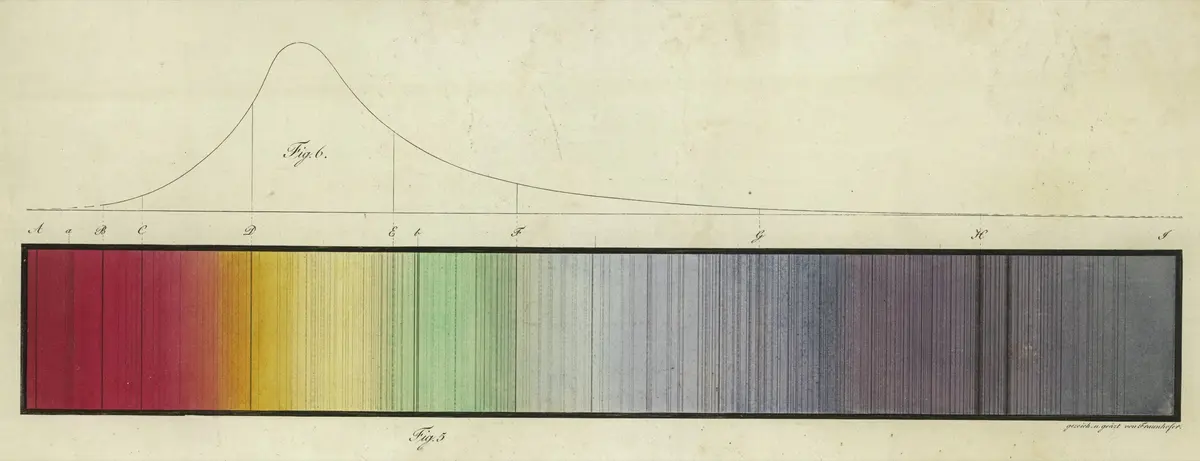
The thermometer rose most in the red and least in the violet. In his first paper, signed on 8 March 1800, red raised it by about 7 degrees in ten minutes, green by about 3, and violet by 2. Then he did the step that made the discovery. Slowly he slid the thermometer past the last visible red, into the dark beside the spectrum. It kept getting warmer. Half an inch beyond the red, where the eye sees nothing, it rose 8 and three quarter degrees (Fahrenheit) in 16 minutes, the strongest heating of all, and it was still warm one and a half inches out. Beyond the violet end there was no effect. Herschel's own conclusion, in a second paper dated 17 March, was that the Sun sends out rays that heat bodies but cannot be seen, and that these are bent by a prism a little less than red light is. He called them 'calorific rays', and he guessed that the invisible rays of the Sun probably outnumber the visible ones.
He did not say he had found a new kind of light, and the word 'infrared' is not his. The Royal Society heard his papers on 27 March, 24 April, 15 May and 6 November 1800. In the May paper he showed that heat rays reflect from mirrors and bend in lenses like light. In the November paper he used glass screens that stopped heat and light by different amounts to argue that heat rays and light rays are probably different things. Today we know that was wrong: they are the same kind of wave, only with longer wavelengths. But the experiment was careful, the numbers were published, and anyone with a prism and three thermometers could repeat it. At the time many scientists thought of heat and light as separate things, so showing that a prism sorted heat in the same way it sorted colours was surprising.
The idea spread quickly. In 1801 Johann Wilhelm Ritter looked at the other end of the spectrum and found that invisible rays beyond the violet darken silver chloride, which became the discovery of ultraviolet. In the early 1830s Macedonio Melloni, with a sensitive thermopile, showed that radiant heat can be reflected, bent and polarised just like light. In 1878 Samuel Langley invented the bolometer, a detector that could pick up tiny differences in heat. Infrared became a tool for astronomers: the IRAS satellite mapped almost the whole sky in infrared in 1983, and the European Space Agency's Herschel Space Observatory, named after him, looked at cold dust and young stars in far infrared from 2009 to 2013. Infrared astronomy began with a thermometer in a Slough window.
What happened
- 1800
In his house at Slough, Herschel is looking for the best way to watch the Sun through his large telescopes. Different combinations of coloured darkening glasses give him a sensation of heat with little light, or plenty of light with scarcely any heat. It occurs to him that the colours of sunlight may carry heat very unequally.
Slough, near Windsor: Herschel's home and Observatory House, where he signed all four of the 1800 papersOn a calm, sunny morning in March, with the day not recorded (it falls between the first paper's hint and the second paper's signing on 17 March), Herschel darkens the window with a thick green curtain and sets his thermometers on a paper-covered stand, with the last visible red on its edge. A thermometer half an inch beyond the red, where there is no light, rises 6 and a half degrees in ten minutes; at one inch 5 and a quarter; at one and a half inches still 3. Beyond the violet nothing happens. The strongest heating, 8 and three quarter degrees in 16 minutes, is half an inch out in the dark.
Slough, near Windsor: Herschel's home and Observatory House, where he signed all four of the 1800 papersAt Slough Herschel signs his first paper. A prism sits in the top of an open window; the spectrum falls on a table; three thermometers with blackened bulbs stand on small slopes behind a card with a slit, two kept in the shade as standards. The thermometer in the red rises about 7 degrees in ten minutes, in the green 3 and in the violet 2. He then finds the best light for seeing small objects is between yellow and green, not in the red.
Slough, near Windsor: Herschel's home and Observatory House, where he signed all four of the 1800 papersAt Slough Herschel signs the second paper. His result: there are rays from the Sun which bend less than red light, heat bodies strongly and light nothing; a prism spreads them out like colours. He calls them 'calorific rays' and thinks the invisible rays of the Sun probably far outnumber the visible ones. He also asks whether light and radiant heat are really different, and says we should not suppose two causes if one will do.
Slough, near Windsor: Herschel's home and Observatory House, where he signed all four of the 1800 papersThe Royal Society, meeting at Somerset House in London, hears the first paper, 'Investigation of the Powers of the Prismatic Colours to Heat and Illuminate Objects, with Remarks, that prove the different Refrangibility of radiant Heat', with a passage on how to view the Sun with big telescopes.
Somerset House, London: where the Royal Society met in 1800 and heard the papersThe Royal Society hears 'Experiments on the Refrangibility of the Invisible Rays of the Sun', the paper that announces the rays beyond the red. It is a short paper, nine pages and a plate, made mostly of tables of thermometer readings.
Somerset House, London: where the Royal Society met in 1800 and heard the papersThe Royal Society hears Part I of 'Experiments on the Solar, and on the Terrestrial Rays that Occasion Heat'. Herschel shows that heat from the Sun, and from hot terrestrial bodies, is given off as rays, and that they reflect from mirrors and bend in lenses like light.
Somerset House, London: where the Royal Society met in 1800 and heard the papersThe Royal Society hears Part II. Herschel tests how much heat and how much light different glasses stop, finds the amounts do not go together, and concludes that the rays of heat and the rays of light are probably different things, less bendable and less scattered than light. It is a wrong conclusion that ends a year of right measurements.
Somerset House, London: where the Royal Society met in 1800 and heard the papers