Radhanath Sikdar
“The Bengali mathematician (1813-1870) who ran the computing office of the Great Trigonometrical Survey; the tale that he found Everest's height is popular, but the records do not support it.”
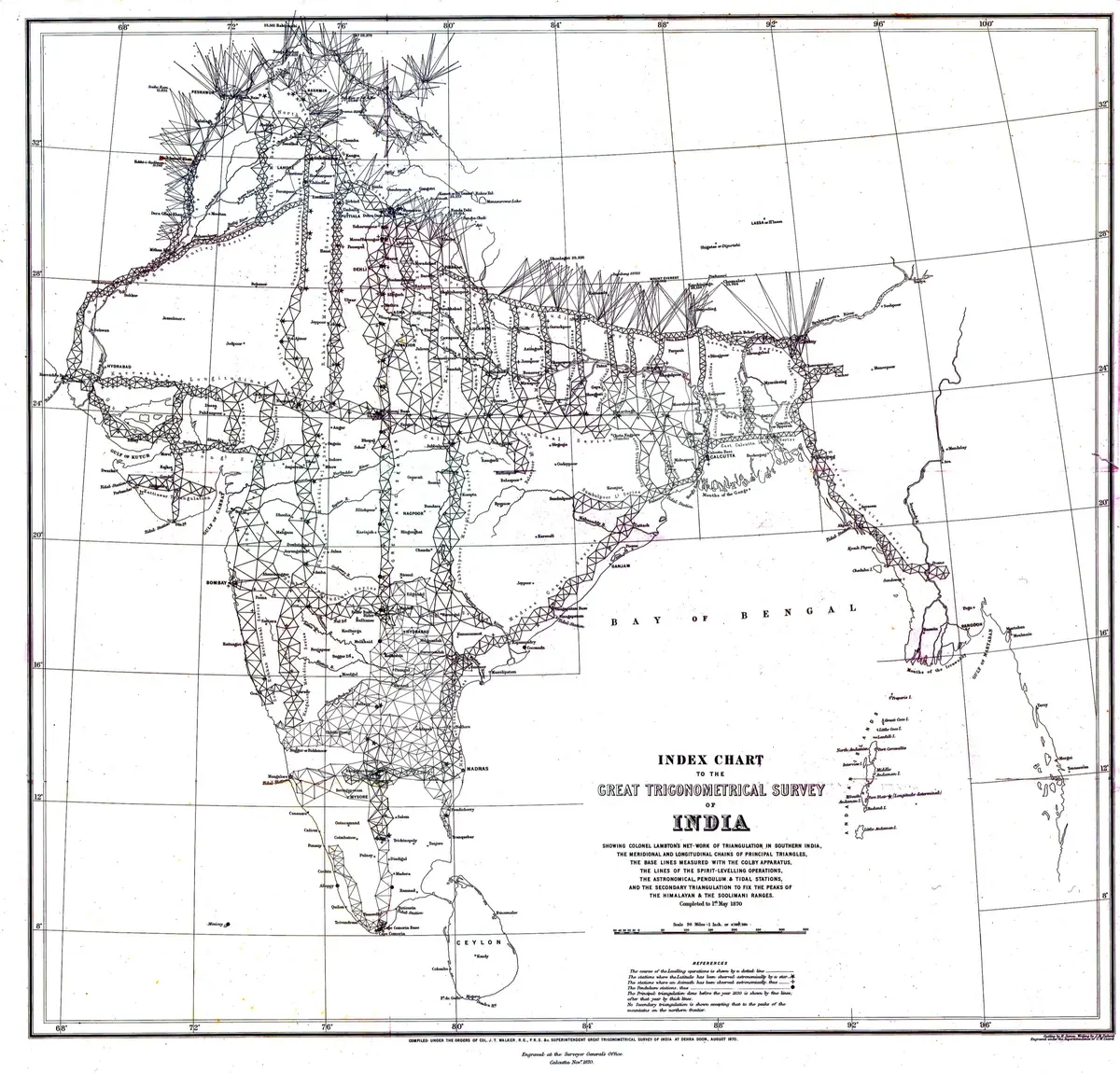
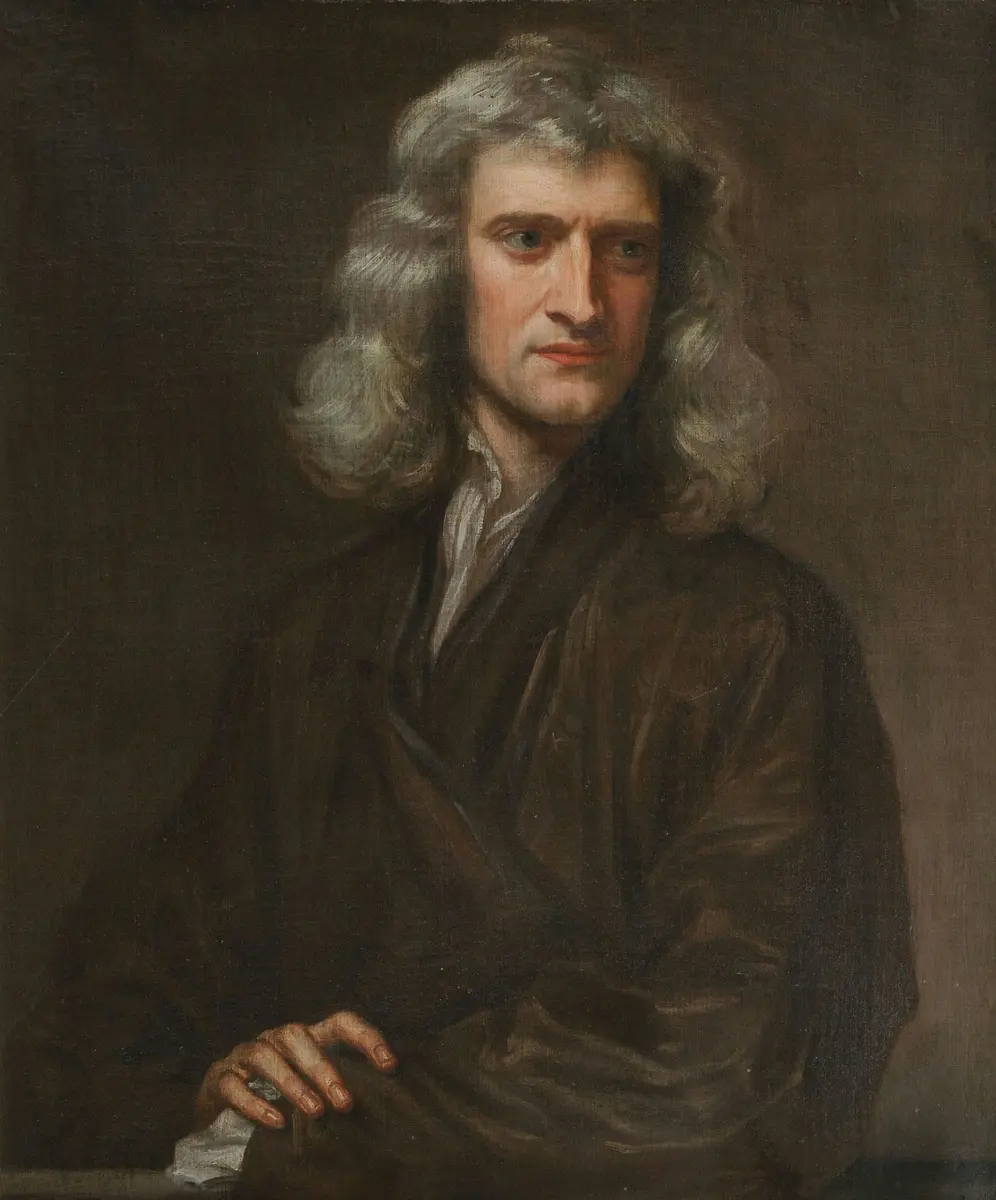
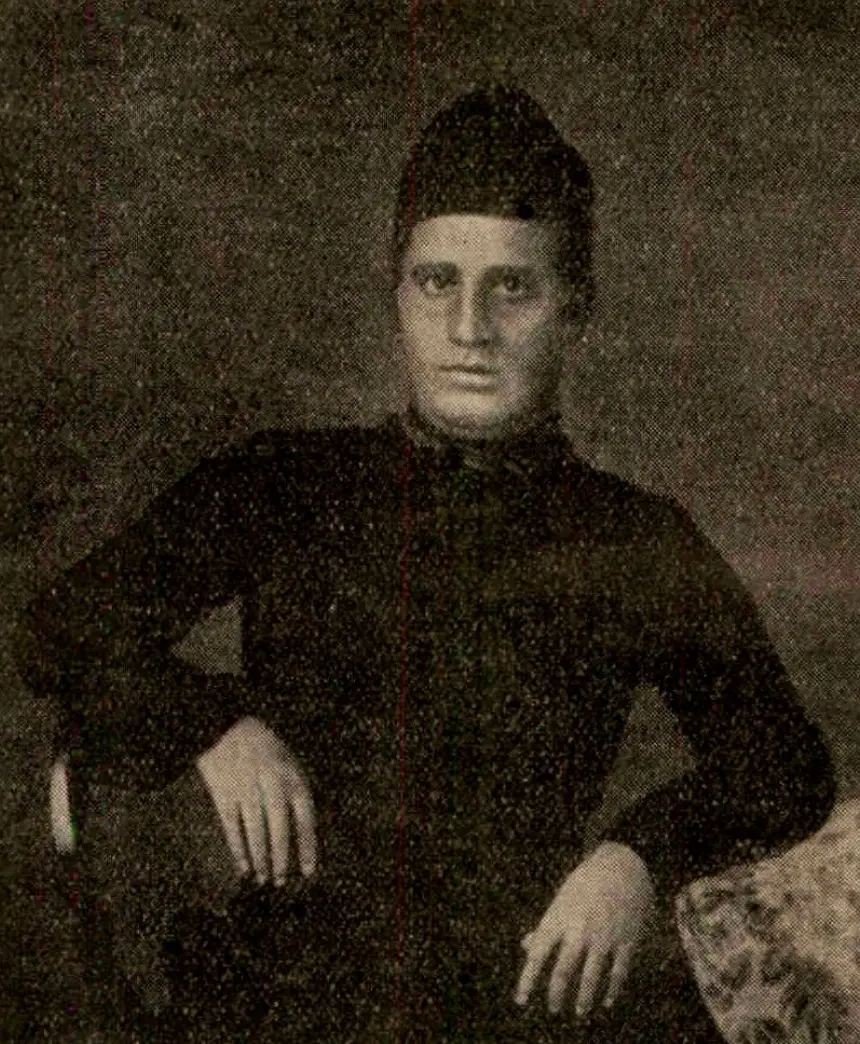
Radhanath Sikdar was a Bengali mathematician who became head of the computing office of the Great Trigonometrical Survey of India, the British project that measured the subcontinent by triangles. He was born in Calcutta in October 1813 and studied at the Hindu College, where he was taught mathematics by John Tytler and was one of the 'Young Bengal' circle around the teacher Henry Derozio. He was one of the first two pupils there to read Newton's Principia. At 18 he printed a neat way to draw a common tangent to two circles in a Calcutta science journal, and a few weeks later Surveyor General George Everest hired him.
He joined the survey's computing office on 20 December 1831 at 30 rupees a month, and soon became a field man too. In October 1832 he left Calcutta to join the arc of triangles going north, and in October 1833 he settled with Everest's office at Mussoorie and Dehra Dun. For some 15 years he worked there on the Great Arc, the long chain of triangles up the length of India, recording angles, helping with the heavy instruments and signalling at night with the blue lights the survey used. Everest wrote in 1838 that Sikdar's mathematics 'would rank very high even in Europe', and begged the government to raise his pay when Sikdar asked to leave for a teaching post. He stayed, and by 1845 he was chief computer.
In 1849 his office was moved to Calcutta, and there he wrote the mathematical parts of the survey's Auxiliary Tables (1850) and of A Manual of Surveying for India (1851), whose preface says that part of it 'is entirely his own'. In 1852 he took charge of the Calcutta meteorological observatory, the first Indian to run a government observatory, and began hourly weather readings. Outside work he helped Peary Chand Mitra start Masik Patrika, a Bengali monthly for women, in 1854, and he was elected a corresponding member of a natural history society in Bavaria in 1864, two years after he retired. He died on 17 May 1870 in Chandannagar and lies in the Sacred Heart cemetery there.
Sikdar is best known for a story, that in 1852 he ran into Andrew Waugh's room and announced that Peak XV, later called Everest, was the highest mountain in the world. The story first appears in print in 1904, and later accounts add that he found 29,000 feet and Waugh added two. The published records do not bear it out. The Himalayan observations were worked up in an office at Dehra Dun, not by Sikdar in Calcutta, and Waugh's own letter of 1856 gives 29,002 feet without naming him. Phillimore, the survey's historian, says plainly that he had no part in it. What the record does show is a gifted mathematician who held a post well below his skill for 30 years, and a survey whose Indian workers were seldom named. The survey itself has its own entry here.
What happened
- 1813
Radhanath is born at Sikdarpara in Jorasanko, Calcutta, the eldest son of Tituram Sikdar, a Brahmin of modest means. Wikipedia gives the day as 5 October.
Jorasanko, Calcutta (Kolkata): where he was born in 1813- 1824
He is admitted to the Hindu College, where he studies English and mathematics, the latter under John Tytler, and is later counted among the Derozians, the pupils of the teacher Derozio.
College Street, Calcutta: the Hindu College (later Presidency College) where he studied from 1824 - 1831
Before leaving college he reads Newton's Principia, one of the first two pupils there to do so, and works through Euclid, Jephson's Fluxions and Windhouse's Astronomy.
A Calcutta science journal prints his construction of a common tangent to two circles, 'altogether his own discovery', with a note on the public talk about the Hindu College. He is 18.
College Street, Calcutta: the Hindu College (later Presidency College) where he studied from 1824Everest, looking for a mathematician for his computing office, takes Sikdar on the recommendation of his teacher; he is appointed a computer at 30 rupees a month. Wikipedia gives 19 December.
Calcutta (Kolkata): the Surveyor General's office, computing office and observatory where he worked from 1849- 1832
He leaves Calcutta with Waugh and Renny, by way of Mirzapur, to join the arc of triangles going north. Everest later calls him 'a hardy, energetic young man'.
- 1833
He joins the Surveyor General's office at Mussoorie and takes the field with Everest. For about six years he works under Everest and Peyton on the Great Arc, taking his turn at the night signals with the blue lights.
Dehra Dun: the survey's headquarters, where he worked beside Everest from 1833 to 1849- 1838
After he asks to leave for a post as a teacher, Everest begs the government for more pay. Sikdar is given an extra 100 rupees a month from 1 June to stay. Everest writes that in mathematics few in India or Europe can compete with him.
Dehra Dun: the survey's headquarters, where he worked beside Everest from 1833 to 1849- 1845
He becomes chief computer of the Great Trigonometrical Survey, in charge of its computing office.
Dehra Dun: the survey's headquarters, where he worked beside Everest from 1833 to 1849 - 1847
The East India Company's Court of Directors presents him with a copy of Everest's Account of the Meridional Arc, in thanks for his part in the work, according to the inscription on the family's copy.
- 1849
His computing office is moved from Dehra Dun to Calcutta, and it stays there until he retires. Kochhar argues that this kept him out of the work on the Himalayan peaks.
Calcutta (Kolkata): the Surveyor General's office, computing office and observatory where he worked from 1849The first of six observations of Peak XV is made from the plains of Bihar; the last is on 17 January 1850. The sums are done at Dehra Dun, in the office of J. B. N. Hennessey, not in Sikdar's.
- 1850
Under Waugh he compiles the first edition of the survey's Auxiliary Tables, the formulae for the geodetic sums that Everest left to his pupils.
- 1851
A Manual of Surveying for India is published in Calcutta. Its preface thanks Sikdar and says that chapters 15, 17-21 and 26 of Part III and all of Part V are entirely his own. The third edition of 1875 left the thanks out.
- 1852
He takes charge of the Calcutta meteorological observatory from V. N. Rees, the first Indian to head a government observatory, and has hourly readings made and tabulated.
Calcutta (Kolkata): the Surveyor General's office, computing office and observatory where he worked from 1849 - 1854
With his fellow Derozian Peary Chand Mitra he starts Masik Patrika, a Bengali monthly for women, in simple Bengali.
- 1856
Waugh writes from Dehra Dun that Peak XV, at 29,002 feet, is probably the highest mountain in the world and should be called Everest. The letter does not mention Sikdar.
- 1862
He retires from the survey and becomes a teacher of mathematics at the General Assembly's Institution (now Scottish Church College). His office is moved back to Dehra Dun.
- 1864
The Hindu Patriot of 25 April reports that the Society of Natural History of Bavaria has made him a corresponding member.
- 1870
He dies at Chandannagar, unmarried, and is buried in the Sacred Heart French Cemetery. His place in the story of Everest is first claimed in 1904.
Chandannagar: where he died in 1870 and is buried in the Sacred Heart cemetery