Synthetic aperture radar is invented
“In June 1951 Carl Wiley of Goodyear saw that a small radar antenna, moving and sorting echoes by Doppler shift, could act like a huge one: synthetic aperture radar, first focused in 1957.”
A radar sees fine detail only if its beam is very narrow, and a narrow beam needs a very long antenna. In the early 1950s the US Army wanted a radar that could photograph the ground from a high aircraft, by night and through cloud. To do that the antenna would have had to be about as long as a football field. Synthetic aperture radar, or SAR, is the way round this problem. A small antenna flies along, sends a pulse every moment and records every echo. Later the recordings are combined as if they had all been caught at once by one huge antenna, as long as the path the aircraft flew. That long, imaginary antenna is the 'synthetic aperture'.
The idea is credited to Carl Wiley, an engineer at Goodyear Aircraft in Arizona. In June 1951, while he was working on a radar guidance system, he saw that every spot on the ground beside the aircraft's path sends its echo back with a slightly different Doppler shift, the small change in frequency caused by the aircraft's own motion. Sort the echoes by frequency and you sort the ground into thin strips, far thinner than the beam itself. Wiley and his colleagues built a test radar, called DOUSER, and flew it. In August 1954 he filed a patent, but the Patent Office put it under a secrecy order, and it was granted only on 20 July 1965.
Wiley was not alone. At the University of Illinois, Chalmers Sherwin's group wrote a report on the same Doppler method in March 1952 and reported flight experiments in July 1953. At the University of Michigan, a team at the Willow Run Research Center took on the harder, fully focused version of the problem. Emmett Leith showed how to treat the recorded echoes like a hologram, and the team processed them with light, lenses and film, because the computers of the 1950s were far too slow. In August 1957 their radar produced a map-like picture of Willow Run Airport, the first focused SAR image. Which of these steps is 'the invention' depends on what you count: the idea and the patent, the first experiments, or the first sharp picture.
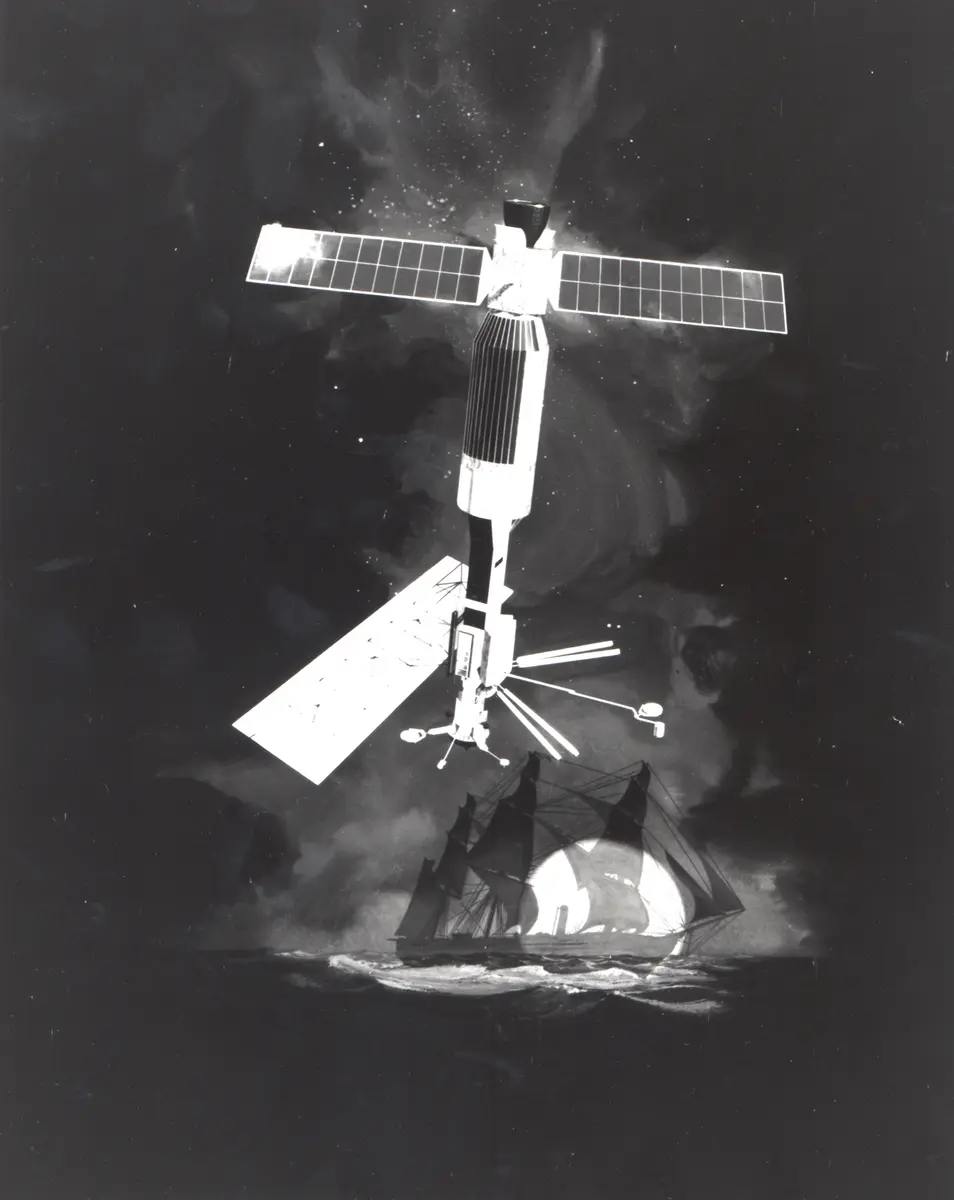
The work was secret, so the world heard of SAR only in the 1960s. A radar satellite called Quill, built with a Goodyear radar, flew for a few days in December 1964. Seasat followed in 1978, and then radars that mapped Venus and Saturn's moon Titan through their clouds. Today fleets of small radar satellites watch floods, ice, ships and ground movements every day. They all use Wiley's trick.
What happened
- 1951
At Goodyear Aircraft in Arizona, Carl Wiley sees that echoes from the ground beside an aircraft's track come back with different Doppler shifts, and that a small antenna moving along can therefore be made to act like a huge one. He is working on a radar guidance system at the time.
Litchfield Park, Arizona: Goodyear Aerophysics, where Carl Wiley worked out and first flew the idea- 1952
Wiley, with Fred Heisley and Bill Welty, builds DOUSER, the 'Doppler Unbeamed Search Radar', to test the idea; Lockheed Martin says a DOUSER carried on a C-47 made the first SAR image, showing features at least 500 feet across.
Litchfield Park, Arizona: Goodyear Aerophysics, where Carl Wiley worked out and first flew the ideaAt the University of Illinois, Chalmers Sherwin of the Control Systems Laboratory writes up 'High Resolution Airborne Radar Employing Doppler Frequency Analysis' (report R-19), followed in April by 'Further Considerations on High Resolution Radar': the same idea, reached independently. The lab tests its radars from a shack on top of Memorial Stadium.
Memorial Stadium, Champaign, Illinois: the secret radar shack of the University of Illinois's Control Systems Laboratory- 1953
In the summer, the Army-run Project Michigan at the University of Michigan's Willow Run Research Center takes up a 'side-looking radar' that will use the whole history of Doppler shifts from each target, not just a few bands: a fully focused SAR. Its first plans come out of the summer study called Project Wolverine.
Willow Run Airport, near Ypsilanti, Michigan: the airfield the University of Michigan's Willow Run Research Center took its name from, and the place shown in the first focused SAR image of 1957The Illinois group reports 'Experiments with High Resolution Radar Using Frequency Analysis' (report R-38). Wikipedia says that this year the group made a 'strip-map' image with sharper detail than the beam alone could give; CSL itself calls its work 'the first demonstration of synthetic aperture radar imaging'.
Memorial Stadium, Champaign, Illinois: the secret radar shack of the University of Illinois's Control Systems Laboratory- 1954
Wiley files a patent for 'Pulsed Doppler Radar Methods and Apparatus'. The Patent Office puts it under a secrecy order in the same month, and it stays in a drawer for eleven years.
- 1956
At Willow Run, physicist Emmett Leith writes an internal memo on his holographic theory of SAR: the recorded echoes, he shows, work like a zone plate, a lens made of rings, so a beam of light can do the sums that no 1950s computer could. The idea is met with indifference for about two years.
Willow Run Airport, near Ypsilanti, Michigan: the airfield the University of Michigan's Willow Run Research Center took its name from, and the place shown in the first focused SAR image of 1957- 1957
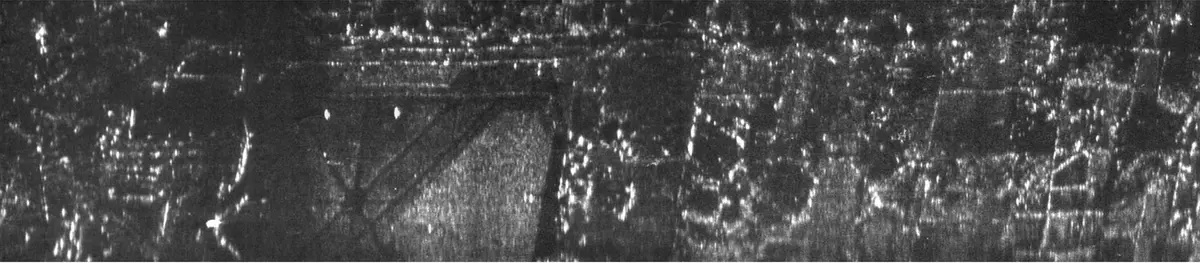
On a flight before dawn, the Willow Run radar, carried in a C-46 and processed with light, lenses and film, makes a map-like picture of the airport and its surroundings: sharp to about 50 feet where the beam itself is 900 feet wide. It is the first focused SAR image, and it saves the project from being cancelled.
Willow Run Airport, near Ypsilanti, Michigan: the airfield the University of Michigan's Willow Run Research Center took its name from, and the place shown in the first focused SAR image of 1957- 1964
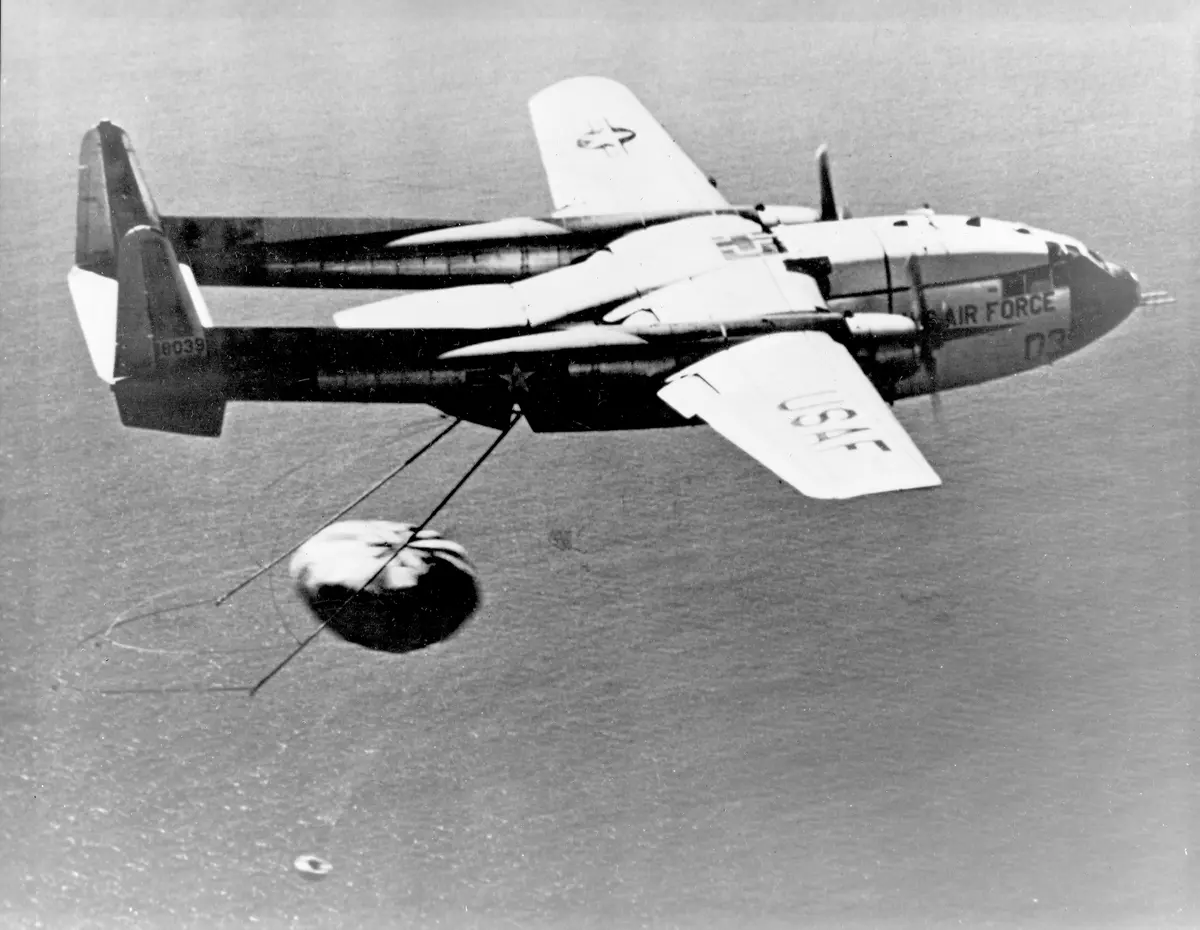
Quill, the first radar-imaging satellite, is launched on a Thor-Agena for a four-day test over the United States. Its radar, built by Goodyear, is an airborne SAR adapted for orbit; the film is dropped back to Earth after two days. The mission is secret until 2009.
- 1965
Wiley's patent 3,196,436 is granted at last, more than eleven years after he filed it. By now SAR is no secret: the Army's first public notice of the principle was in 1960, and a satellite has already flown it.