The first digital camera
“In December 1975 Steven Sasson at Kodak recorded a 100-by-100-pixel black-and-white picture on a cassette tape in 23 seconds: the first self-contained hand-held digital camera.”
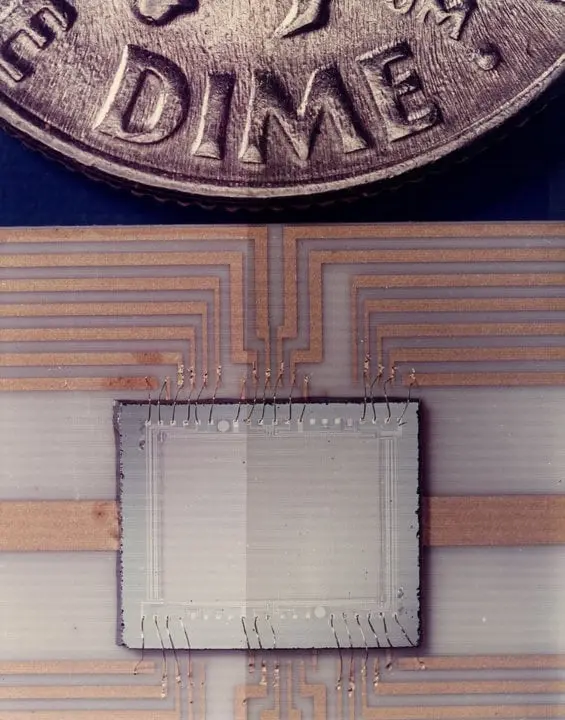
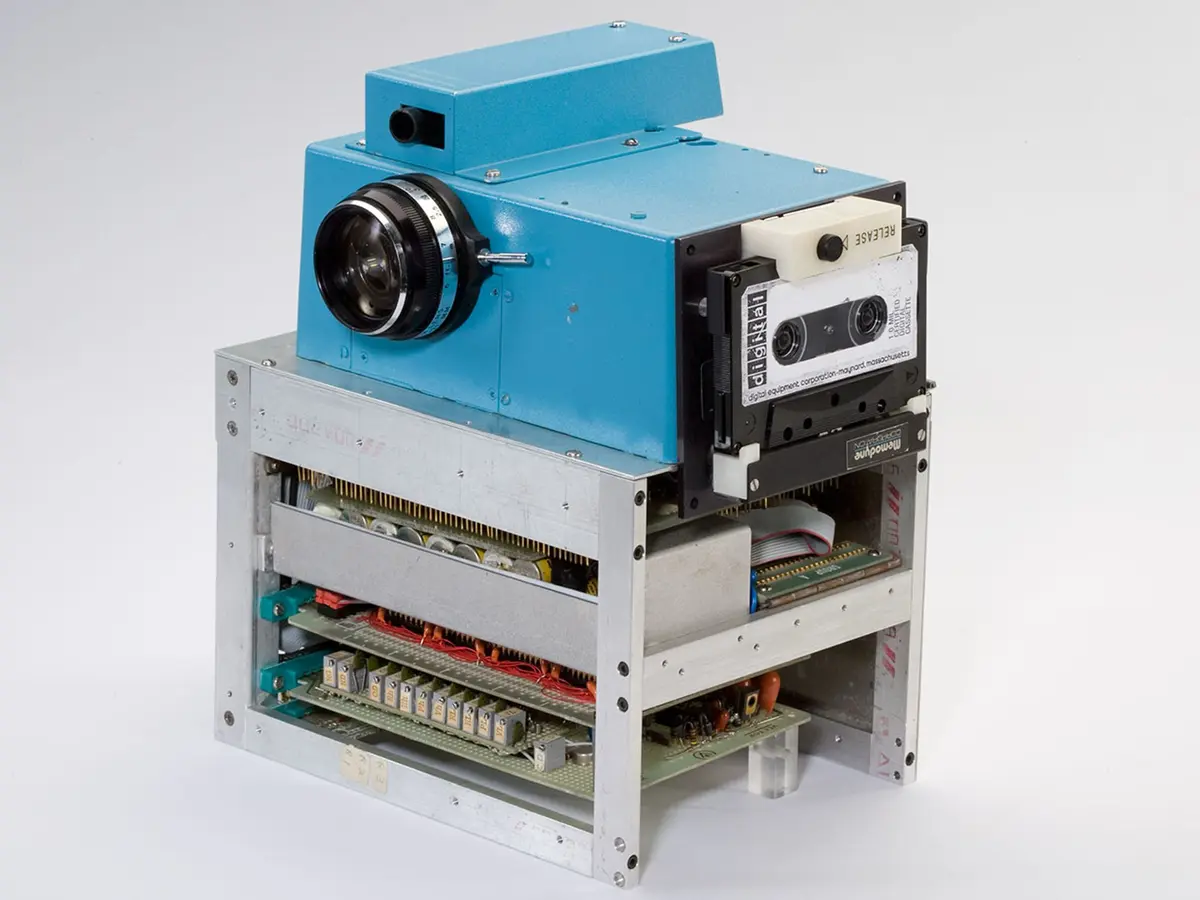
In December 1975 a young engineer at Eastman Kodak in Rochester, New York, took a picture with a camera that kept it as numbers on a cassette tape instead of on film. The camera was a stack of circuit boards in a blue metal case, about the size of a toaster and weighing roughly 8 pounds (3.6 kg). Its light sensor was a Fairchild charge-coupled device with 100 by 100 pixels, so a picture held only 10,000 dots, all in black and white. Saving one picture to the tape took 23 seconds, and to see it you had to play the tape back on a separate unit connected to a television.
The engineer was Steven Sasson, who had joined Kodak's research laboratories in 1973 after studying electrical engineering at Rensselaer Polytechnic Institute. In 1974 his supervisor, Gareth Lloyd, gave him a very broad question: could a camera be built with a solid-state sensor? Sasson had almost no budget and little to read, because almost nothing had been written on the subject. He used a lens and exposure mechanism from a Kodak movie camera, an analog-to-digital converter built from Motorola parts, twelve memory chips of 4,096 bits each as a short-term buffer, and a portable cassette recorder, all powered by 16 AA batteries. He designed the circuits himself and could only check them with an oscilloscope; there was no picture to look at until everything worked together.
His first test picture, made in December 1975 (IEEE Spectrum gives 12 December), was of a lab technician who agreed to pose, named Joy Marshall by IEEE Spectrum. On the playback screen her hair showed up but her face was a blur of static, and she is reported to have said it needed work. Sasson soon found that two wires were reversed; once he swapped them, her face appeared. He kept improving the system and showed it around Kodak in 1976. Some people were curious, some were annoyed, and when asked how long it would take to become a product, he answered 15 to 20 years.
Kodak filed a patent for an electronic still camera on 20 May 1977, naming Sasson and Lloyd, and it was granted on 26 December 1978 as US patent 4,131,919. It describes an idea that digital cameras still use: read the sensor out very fast into a small memory, then write the picture to slower storage. Kodak did not put the camera on sale. Sony showed an electronic still camera in 1981 that recorded on small magnetic disks, and Kodak itself did not start selling mass-market digital cameras until 2001.
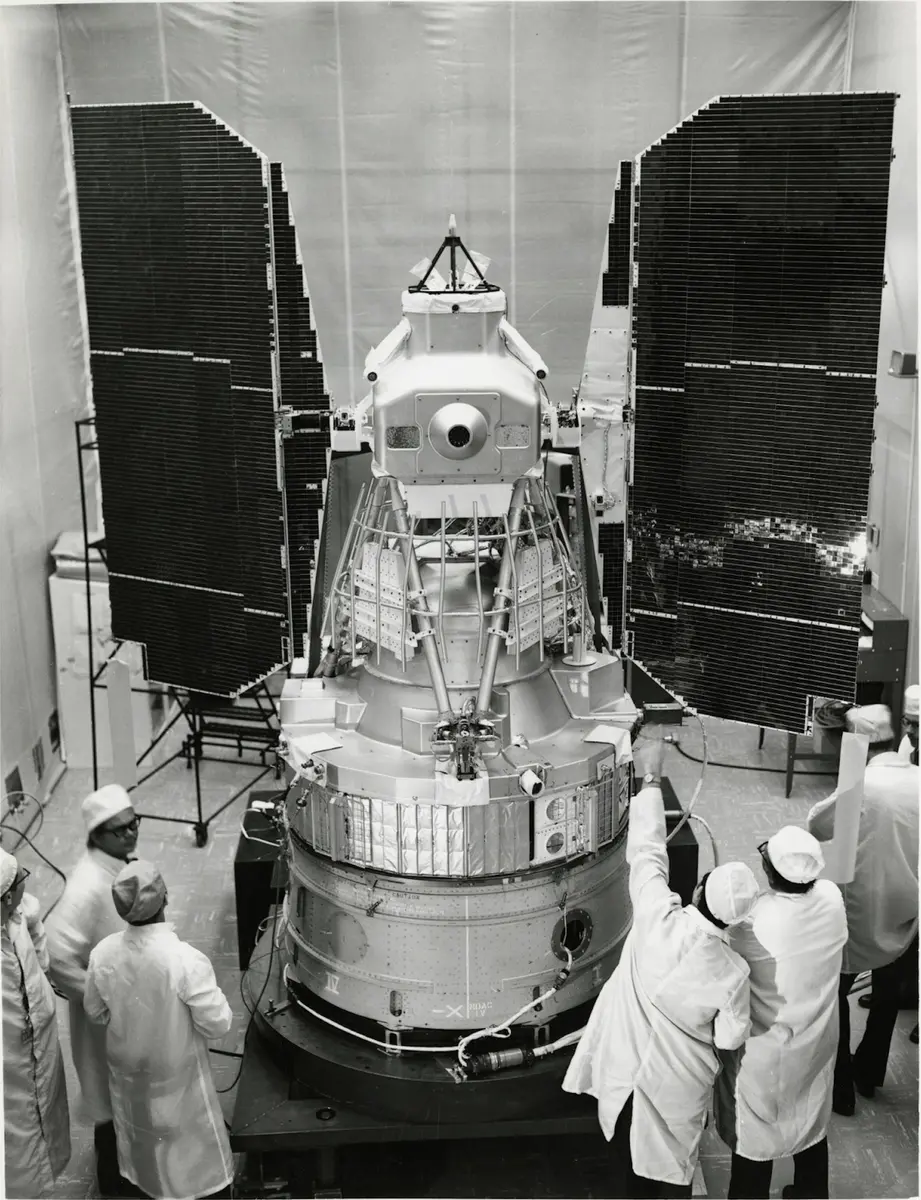
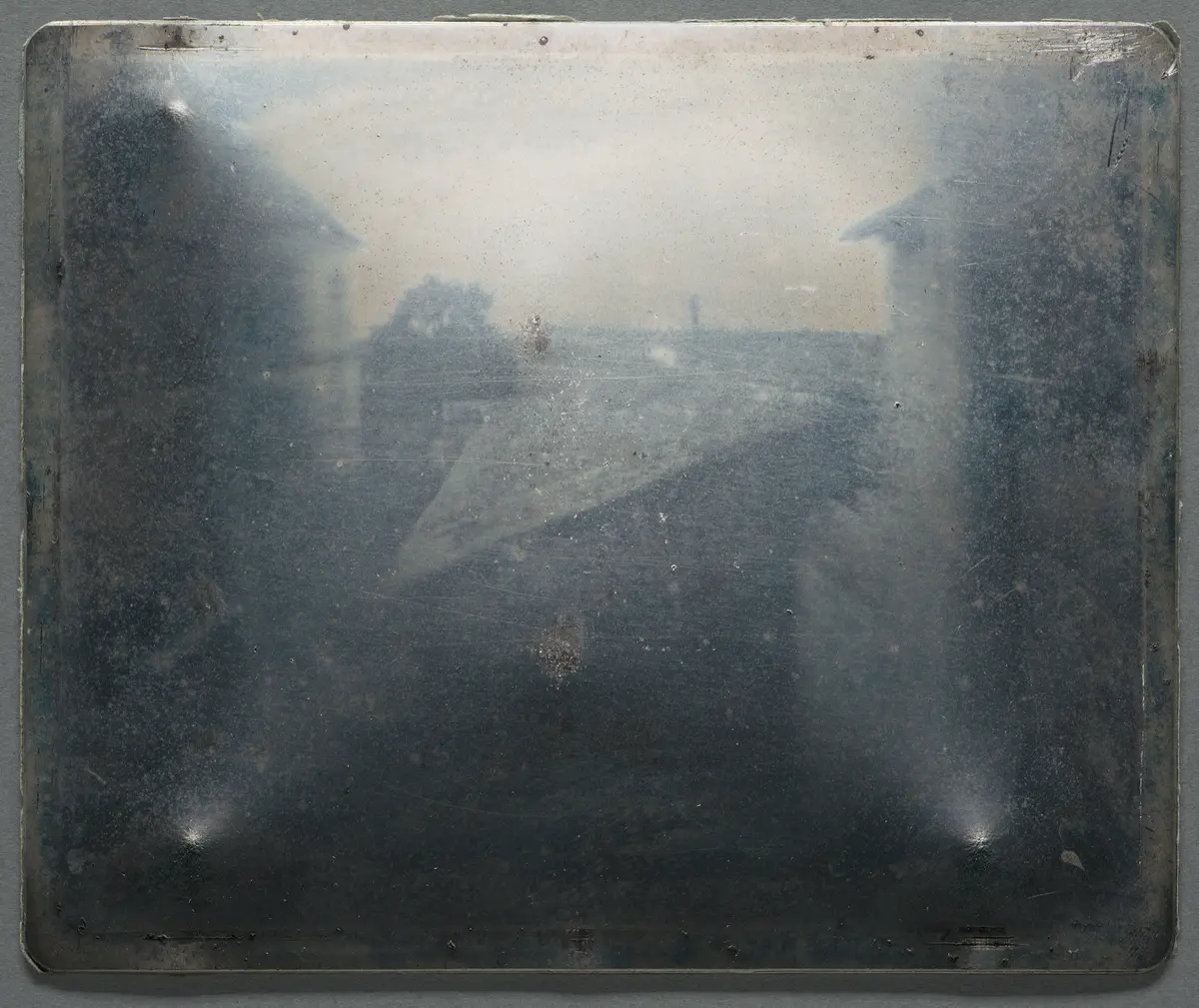
The camera was not the first device to make digital images; satellites, telescopes and the hobbyist Cromemco Cyclops were all earlier or at the same time. What it was is the first hand-held camera that held its own sensor, memory and storage in one piece, which is the shape of every digital camera since. Sasson received the US National Medal of Technology and Innovation in 2009, and IEEE named the camera a Milestone in 2022. The prototype is reported to be in the collection of the George Eastman Museum in Rochester.
What happened
- 1974
Gareth Lloyd, Sasson's supervisor in Kodak's research laboratories, sets him a broad task: could a camera be built around a solid-state sensor? Sasson picks the new Fairchild charge-coupled device, 100 by 100 pixels.
Kodak Center, Rochester, New York: Kodak's home in Rochester, where the IEEE Milestone plaque stands. Sasson worked in Kodak's Rochester laboratories; the sources do not name the building where the camera was made - 1975
Working mostly alone in a spare laboratory, Sasson builds the camera from what he can find: the lens and exposure mechanism of a Kodak movie camera, a Motorola converter, twelve memory chips, a cassette recorder and 16 AA batteries. He designs the circuits himself and tests them with an oscilloscope.
Kodak Center, Rochester, New York: Kodak's home in Rochester, where the IEEE Milestone plaque stands. Sasson worked in Kodak's Rochester laboratories; the sources do not name the building where the camera was madeThe first picture: a lab technician poses. The camera records it in about 23 seconds, and the same time again is needed to show it on a television. Her hair is clear but her face is static; reversing a set of wires later fixes it. IEEE Spectrum gives 12 December; another account says 9 December.
Kodak Center, Rochester, New York: Kodak's home in Rochester, where the IEEE Milestone plaque stands. Sasson worked in Kodak's Rochester laboratories; the sources do not name the building where the camera was made- 1976
Sasson shows the camera and its playback unit to people inside Kodak. Reactions range from curiosity to annoyance; asked when it could be a product, he says 15 to 20 years.
Kodak Center, Rochester, New York: Kodak's home in Rochester, where the IEEE Milestone plaque stands. Sasson worked in Kodak's Rochester laboratories; the sources do not name the building where the camera was made - 1977
Kodak files its patent application for an electronic still camera, naming Gareth Lloyd and Steven Sasson as inventors.
- 1978
US patent 4,131,919 is granted. Its main claim is to read the sensor out fast into a temporary memory, then write the picture to slower storage, an arrangement digital cameras still use.