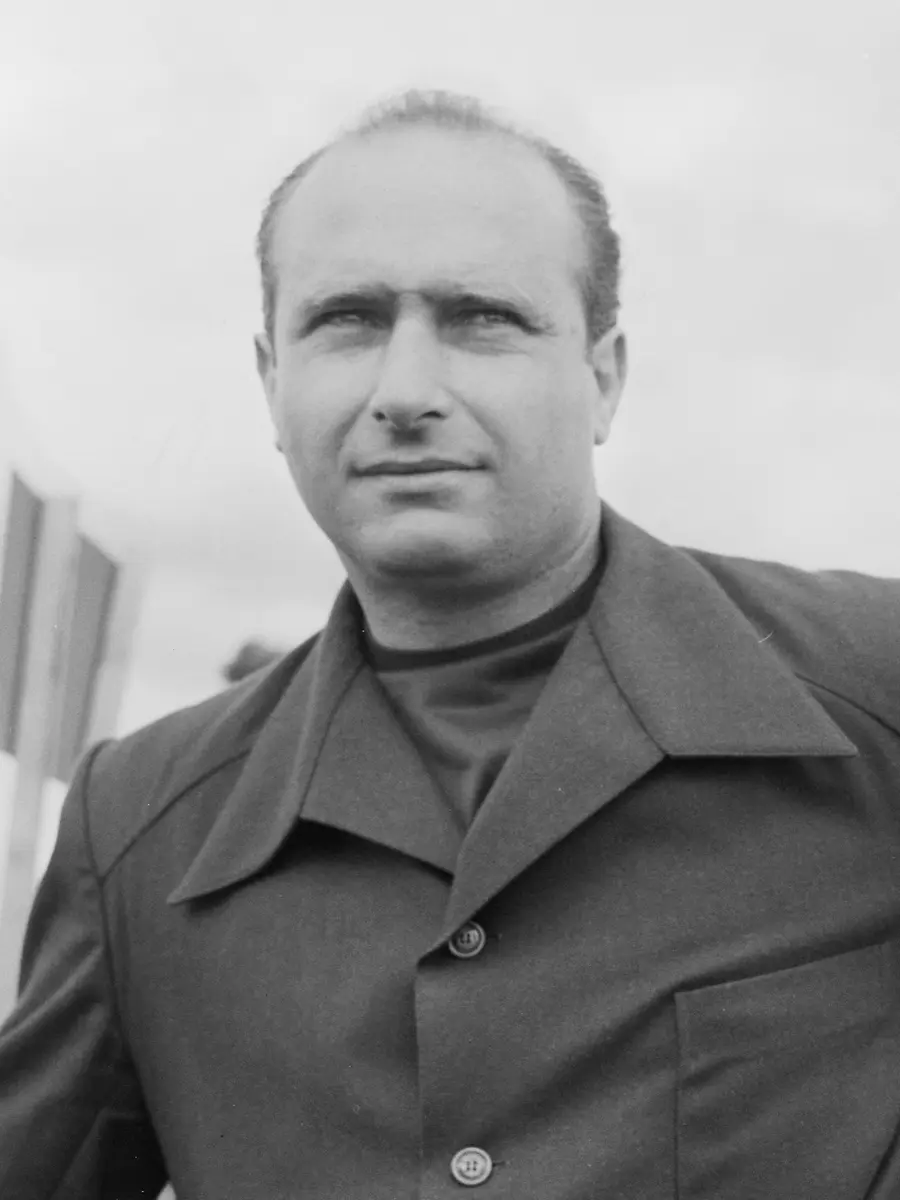
Juan Manuel Fangio
“The Argentine who won five Formula One world championships (1951, 1954-57) in four makes of car, and whose Nürburgring win of 1957 is often called the greatest drive in racing.”
Juan Manuel Fangio was an Argentine racing driver who won the Formula One World Championship five times: in 1951 and in each year from 1954 to 1957. He won with four makes of car, Alfa Romeo, Maserati, Mercedes-Benz and Ferrari, driving for both Maserati and Mercedes in 1954 and for Maserati again in 1957, and he won 24 of the 51 Grands Prix he started. Racing people called him 'El Chueco', the bow-legged one. He was known for saving his cars and tyres, and for driving only as fast as he needed to win.
He was born on 24 June 1911 in Balcarce, a farming town south of Buenos Aires, ten minutes after midnight, the fourth child of Italian-descended parents. At 13 he left school and went to work in a garage; as a young man he built his own workshop with friends. He drove his first race in 1936 in a borrowed taxi and won the big Argentine road races in a Chevrolet, taking the Turismo Carretera title in 1940 and 1941; the 1940 car was paid for with the money from a raffle. In 1948 he crashed in Peru and his co-driver and friend Daniel Urrutia was killed; he nearly gave up racing.
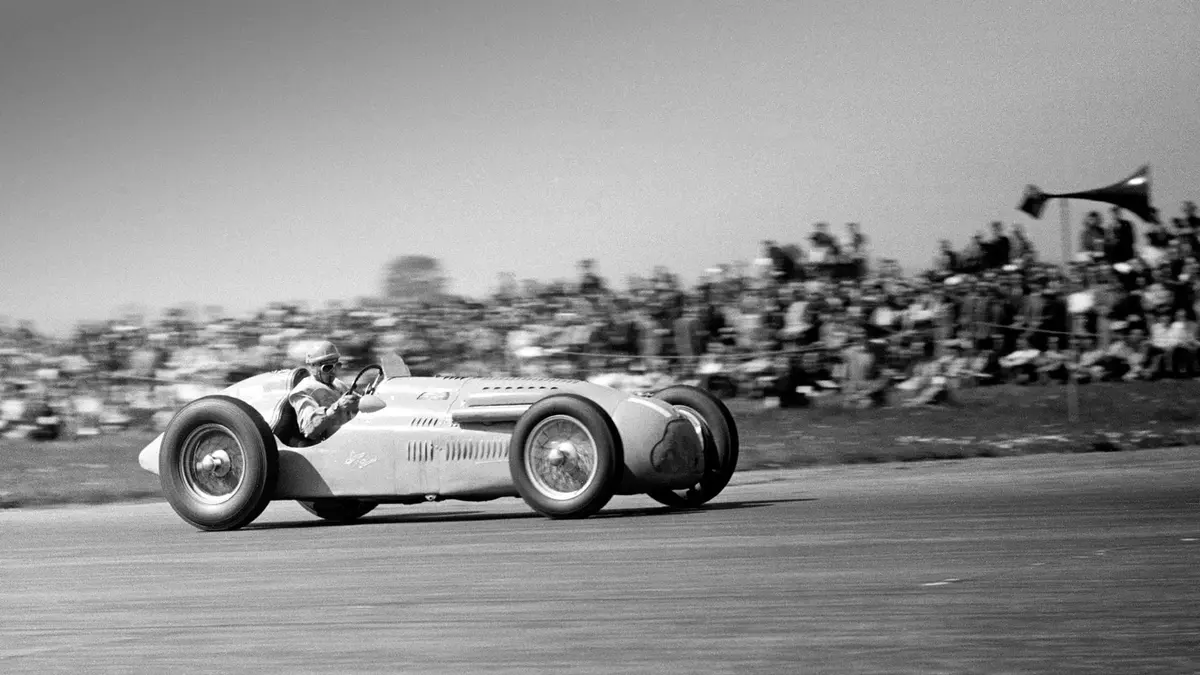
In 1949 he went to Europe and began to win. He was second to his Alfa Romeo team-mate Giuseppe Farina in the first world championship, in 1950, and champion in 1951. In June 1952 he crushed vertebrae in his neck in a crash at Monza and missed the season. He came back with Maserati, joined Mercedes-Benz in 1954 and won two titles in its silver cars, in a team run by Alfred Neubauer with Stirling Moss as his team-mate. When Mercedes left racing at the end of 1955 he moved to Ferrari and took a fourth title in 1956, helped at Monza by Peter Collins, who gave him his car.
His last title, in 1957 for Maserati, is remembered for one race. At the Nürburgring on 4 August he led on half-full tanks, lost most of a minute in the pits when the wheel change went wrong, and then caught and passed the two Ferraris in the last laps, setting lap records as he went. In February 1958 he was kidnapped in Havana the evening before the Cuban Grand Prix by rebels of Fidel Castro's 26th of July Movement, and released unhurt after the race. He retired in July 1958, at Reims, where he had started his European career.
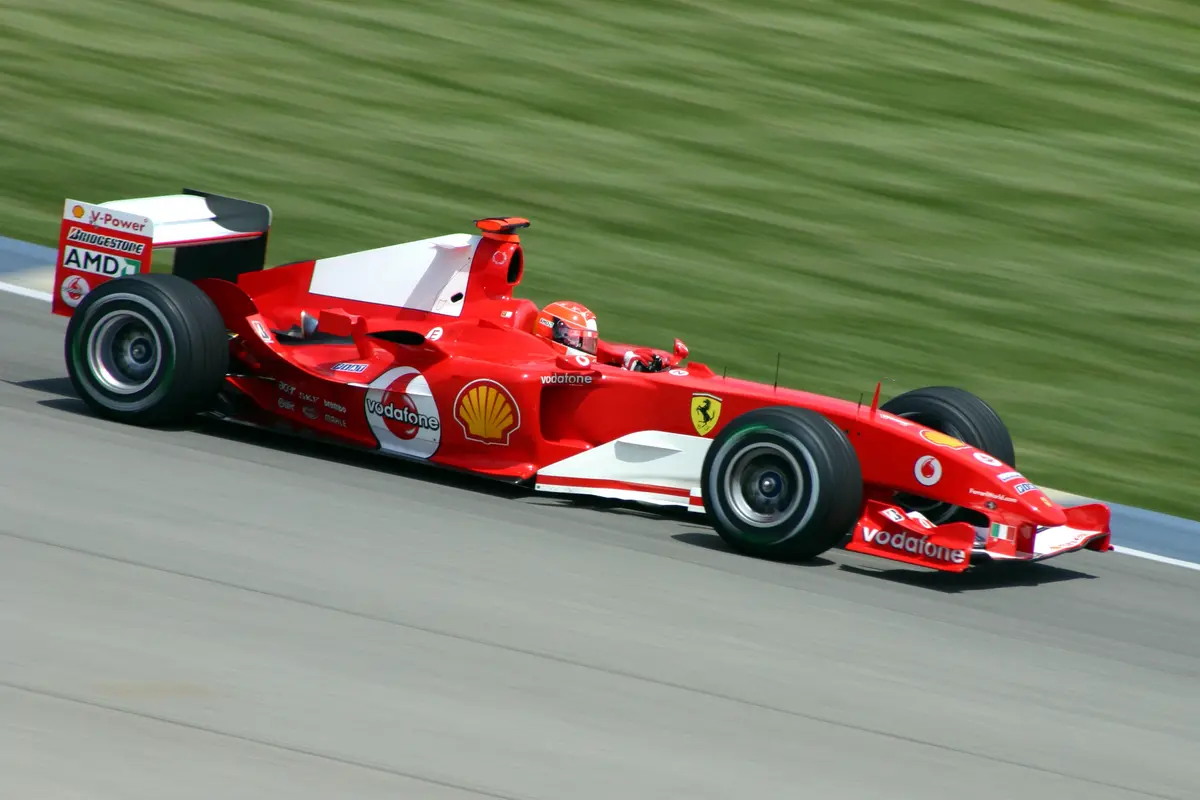
After racing he ran a Mercedes agency in Buenos Aires and became president of Mercedes-Benz Argentina in 1974. The Fangio Museum opened in Balcarce in 1986. He died in Buenos Aires on 17 July 1995, aged 84, and is buried in his home town. His five titles stood as the record until Michael Schumacher won a sixth in 2003, and in 1980 a vote of the world's racing journalists named him the best driver of all time.
What happened
- 1911
- 12:10 a.m.
Juan Manuel Fangio is born in Balcarce, a farming town in Buenos Aires province, ten minutes after midnight on the night of the Saint John bonfires. He is the fourth child of Loreto Fangio, a bricklayer's labourer born in Italy, and Herminia Déramo. A clerk's mistake puts 23 June in the town register.
Balcarce, Buenos Aires province: where he was born on 24 June 1911, learnt his trade, built his workshop and lies buried; the Fangio Museum stands on its central square - 1924
At 13 he leaves school and goes to work as a mechanic's assistant in Miguel Viggiano's garage, a Studebaker agency, where he learns to tune engines. He had been sweeping floors in a Balcarce workshop since he was 11.
- 1929
He rides for the first time in a race, as co-driver (riding mechanic) to a garage customer, Manuel Ayerza, in a 1928 Chevrolet on a country road race. They finish second.
- 1932
With his friend José Duffard he builds a dirt-floor workshop beside his father's house in Balcarce, from old chassis rails and zinc sheets, with tools bought from a collection of 80 pesos. It grows into the firm Fangio, Duffard y Cía.
Balcarce, Buenos Aires province: where he was born on 24 June 1911, learnt his trade, built his workshop and lies buried; the Fangio Museum stands on its central square - 1936
He drives his first race, in an unofficial meeting at Benito Juárez, under the made-up name 'Rivadavia' (his old football club). The car is a 1929 Ford A taxi lent by a friend's father. He is third, two laps from the end, when a connecting rod melts.
- 1937
He races at La Chata, the dirt circuit at Balcarce, in a borrowed eight-cylinder Buick. The gear lever comes off in his hand at the start; he holds third gear with a screwdriver and drives on until he hits a drain and has to stop.
Balcarce, Buenos Aires province: where he was born on 24 June 1911, learnt his trade, built his workshop and lies buried; the Fangio Museum stands on its central square- 1938
His official debut as a racing driver, at the Necochea circuit in a Ford V8 engine on a 1934 chassis that friends helped him buy. He is third in his heat and seventh in the final.
In his first long road race, the Gran Premio Argentino de Carreteras (18-30 October), he is co-driver to the Balcarce driver Luis Finocchietti and takes the wheel for much of the way. They finish seventh.
- 1939
He starts his first Turismo Carretera season, in the Argentine Grand Prix, in a black 1939 Chevrolet coupe paid for with collections among the people of Balcarce. He wins the fourth stage, Catamarca to San Juan.
- 1940
He wins the Gran Premio Internacional del Norte, 9,445 km in 13 stages from Buenos Aires to Lima, Peru, and back, in a green 1940 Chevrolet coupe, number 26: 109 hours at an average of 86 km/h, ahead of 92 starters. He pays for the car with the money from a raffle that had the car itself as its first prize. He is Argentine Turismo Carretera champion for the year.
- 1941
He wins the Getúlio Vargas Grand Prix in Brazil (22-29 June), beating his great Argentine rival Oscar Gálvez, his first international win.
He wins the Thousand Argentine Miles and is Turismo Carretera champion for the second time.
- 1942
He wins the Mar y Sierras race in the green Chevrolet. Later that month the war suspends motor racing in Argentina; he does not race seriously again until 1946.
- 1948
He starts his first Grand Prix in Europe, the French Grand Prix at Reims, in a Simca-Gordini, and retires with engine trouble. Ten years later he will end his career on the same circuit.
On the seventh stage of the Gran Premio de la América del Sur, from Lima to Tumbes in Peru, his Chevrolet rolls down an embankment in mist before dawn. His co-driver and friend Daniel Urrutia is thrown out and dies in hospital. Fangio, in hospital too, radios the other drivers to carry on, and weeks later is thinking of giving up racing to go back to his garage.
- 1949
He goes to Europe as captain of an Argentine team named after the driver Achille Varzi, based at Galliate near Milan, and wins the San Remo Grand Prix in a Maserati. The museum counts six wins in ten European races that year, including Pau on 18 April and Perpignan on 8 May; Perón decorates him on the Casa Rosada balcony on his return.
- 1950
The first Formula One World Championship race, at Silverstone. Fangio, signed to Alfa Romeo with Giuseppe Farina and Luigi Fagioli, starts third and retires with an oil leak; Farina wins.
He wins the Monaco Grand Prix. On the first lap a wave floods the track at Tabac and a pile-up closes the road; Fangio gets through the wreckage on the first lap; when the leaders next reach Tabac on lap two, he reads the crowd, brakes hard and stops short of the wreckage. He wins by more than a lap from Alberto Ascari.
The Italian Grand Prix at Monza: Fangio's engine fails and Farina takes the first title, 30 points to Fangio's 27, though each has won three races. Fangio has won at Monaco, Spa and Reims.
Monza, Italy: the circuit of his crash of 1952, his wins of 1953, 1954 and 1955, and the shared car of 1956- 1951
At Reims his own Alfa Romeo loses about eleven minutes with ignition trouble; the team orders Luigi Fagioli to hand over his car, and Fangio drives it to a shared win. A furious Fagioli leaves Grand Prix racing.
At Pedralbes, Barcelona, he wins the Spanish Grand Prix and his first world championship, 31 points to Ascari's 25. An Argentine magazine puts him on its cover three weeks later with José Froilán González, third in the table.
- 1952
After racing a BRM at Dundrod in Northern Ireland the day before, he travels through the night to Monza to drive a Maserati in the Monza Grand Prix. Tired, he crashes coming out of the Lesmo curve, crushing vertebrae in his neck. He spends months in a plaster cast and misses the rest of the season.
Monza, Italy: the circuit of his crash of 1952, his wins of 1953, 1954 and 1955, and the shared car of 1956- 1953
At Monza, in a Maserati, he wins a last-corner finish against Ferrari's Ascari and Farina. He ends the season second to Ascari.
Monza, Italy: the circuit of his crash of 1952, his wins of 1953, 1954 and 1955, and the shared car of 1956He wins the Carrera Panamericana road race in Mexico in a Lancia D24.
- 1954
He opens the season by winning the Argentine Grand Prix in Buenos Aires in a Maserati 250F.
Autódromo Oscar y Juan Gálvez, Buenos Aires: the track of the Argentine Grand Prix, which he won in 1954, 1955, 1956 and 1957Mercedes-Benz names him team leader for its return to Grand Prix racing. Its new car, the W196, will not be ready until July, so he starts the year in a Maserati.
He wins the Belgian Grand Prix at Spa in a Maserati, his last race for the firm before he moves to Mercedes.
The Mercedes W196 makes its debut in the French Grand Prix at Reims. Its enclosed 'streamliner' bodies take the first two places on the grid, Fangio's in front of Karl Kling's, and the two finish in the same order, Fangio winning by a tenth of a second.
He wins the European Grand Prix, run on the Nürburgring. Mercedes now uses open-wheel versions of the W196 on slower tracks, as it does here for the first time.
Nürburgring, Germany: the track of his wins in 1954, 1956 and 1957 and of the greatest drive of his career, 4 August 1957He wins the Italian Grand Prix at Monza after Stirling Moss's Maserati fails with ten laps to go.
Monza, Italy: the circuit of his crash of 1952, his wins of 1953, 1954 and 1955, and the shared car of 1956He finishes third in the Spanish Grand Prix with oil spraying from his engine. Six wins and 42 points give him his second title, with two makes of car in one season.
- 1955
He wins the Argentine Grand Prix in Buenos Aires in the fierce summer heat, in a race where most of the field has to share cars with relief drivers. The magazine El Gráfico puts him on its cover five days later as 'world champion of 1954'.
Autódromo Oscar y Juan Gálvez, Buenos Aires: the track of the Argentine Grand Prix, which he won in 1954, 1955, 1956 and 1957- 1:40 a.m.
At the Le Mans 24 Hours the Mercedes of Pierre Levegh crashes into the crowd at 18:28 on 11 June, killing 83 spectators and Levegh. After midnight the Daimler-Benz board orders its remaining cars out of the race, the Fangio-Moss car among them, withdrawn at 01:40 while leading.
He wins the Dutch Grand Prix at Zandvoort, a Mercedes one-two with his new team-mate Stirling Moss, who is the first to congratulate him.
He wins the Italian Grand Prix at Monza and ends the season with 40 points to Moss's 23, his third world championship.
Monza, Italy: the circuit of his crash of 1952, his wins of 1953, 1954 and 1955, and the shared car of 1956Daimler-Benz announces that it is giving up motor racing. The company's archive says it wanted the money and engineers for production cars. Fangio is free to move, and signs for Ferrari.
- 1956
He drives for Ferrari, in the Lancia-Ferrari D50. A picture of him at the Kristianstad sports-car meeting in Sweden on 12 August is in the album.
He wins the opening Argentine Grand Prix after his own Ferrari's fuel pump fails and he takes over Luigi Musso's car; the two share the result.
Autódromo Oscar y Juan Gálvez, Buenos Aires: the track of the Argentine Grand Prix, which he won in 1954, 1955, 1956 and 1957He wins the German Grand Prix at the Nürburgring in the Ferrari.
Nürburgring, Germany: the track of his wins in 1954, 1956 and 1957 and of the greatest drive of his career, 4 August 1957At Monza his steering arm breaks on lap 18. On lap 35 young Peter Collins, who could himself have won the title, stops and gives Fangio his car. Fangio finishes second, six seconds behind Moss, shares the points, and wins his fourth world championship, 30 points to Moss's 27 and Collins's 25.
Monza, Italy: the circuit of his crash of 1952, his wins of 1953, 1954 and 1955, and the shared car of 1956- 1957
He wins the first Cuban Grand Prix, a sports-car race on the seafront Malecón of Havana in a Maserati 300S,.
Hotel Lincoln, Havana: where gunmen of the 26th of July Movement took him on the evening of 23 February 1958At the end of lap 12, with a 28-second lead, he comes in for rear wheels and fuel. The stop takes 52 seconds, much longer than planned, and he rejoins more than three-quarters of a minute behind the Ferraris.
Nürburgring, Germany: the track of his wins in 1954, 1956 and 1957 and of the greatest drive of his career, 4 August 1957He breaks the lap record again and again, with a lap of 9 minutes 17.4 seconds on lap 20 of the 14-mile circuit. He passes Collins near the end of lap 20 and Hawthorn with a lap and a half to go.
Nürburgring, Germany: the track of his wins in 1954, 1956 and 1957 and of the greatest drive of his career, 4 August 1957He wins by 3.6 seconds from Hawthorn, with Collins third. He later said he had taken himself and the car 'to the limit, and perhaps a little bit more'. With 34 points to the next man's 16 and two races to go, his fifth title is effectively decided.
Nürburgring, Germany: the track of his wins in 1954, 1956 and 1957 and of the greatest drive of his career, 4 August 1957- 1:15 p.m.
The German Grand Prix at the Nürburgring starts at 1.15 in the afternoon before about 200,000 spectators. Fangio, in his Maserati 250F, is on pole and starts with half-full tanks and softer tyres, planning to stop while the two Ferraris of Mike Hawthorn and Peter Collins, which carry full tanks, run non-stop.
Nürburgring, Germany: the track of his wins in 1954, 1956 and 1957 and of the greatest drive of his career, 4 August 1957 - 1958
On the evening before the Cuban Grand Prix a man with a pistol approaches him in the lobby of the Hotel Lincoln, Havana, and tells him to come. The kidnappers belong to Fidel Castro's 26th of July Movement; they want to embarrass the Batista government and win attention. He is driven between safe houses, fed, and allowed to listen to the race.
Hotel Lincoln, Havana: where gunmen of the 26th of July Movement took him on the evening of 23 February 1958The race goes ahead without him. Six laps in, a Cuban driver's Ferrari skids on oil and ploughs into the crowd near the American Embassy, killing six or seven spectators and injuring about 40; the race is stopped and Stirling Moss is declared the winner. After the race Fangio is handed over unharmed to the Argentine ambassador, 27 to 29 hours after he was taken, and a few days later he flies to New York.
Hotel Lincoln, Havana: where gunmen of the 26th of July Movement took him on the evening of 23 February 1958He ends his career at the French Grand Prix at Reims, where he had started ten years earlier, finishing fourth in a Maserati 250F. He had raced only twice that season.
- 1974
He becomes president of Mercedes-Benz Argentina. He had held a Mercedes agency in Buenos Aires since the 1950s.
- 1980
On the eve of the Brazilian Grand Prix the International Racing Press Association announces the result of a vote of its members for the best driver of all time: Fangio first with 278 points, ahead of Jackie Stewart (255) and Jim Clark (253).
- 1982
He has a five-bypass heart operation in Buenos Aires, by the surgeon René Favaloro, after heart trouble in Dubai the year before.
- 1986
The Fangio Museum opens in Balcarce, in the old town hall on the central square, built in 1906. He had given the town part of his trophies and some of his cars in 1983. Many of his old rivals are there.
Balcarce, Buenos Aires province: where he was born on 24 June 1911, learnt his trade, built his workshop and lies buried; the Fangio Museum stands on its central square- 1992
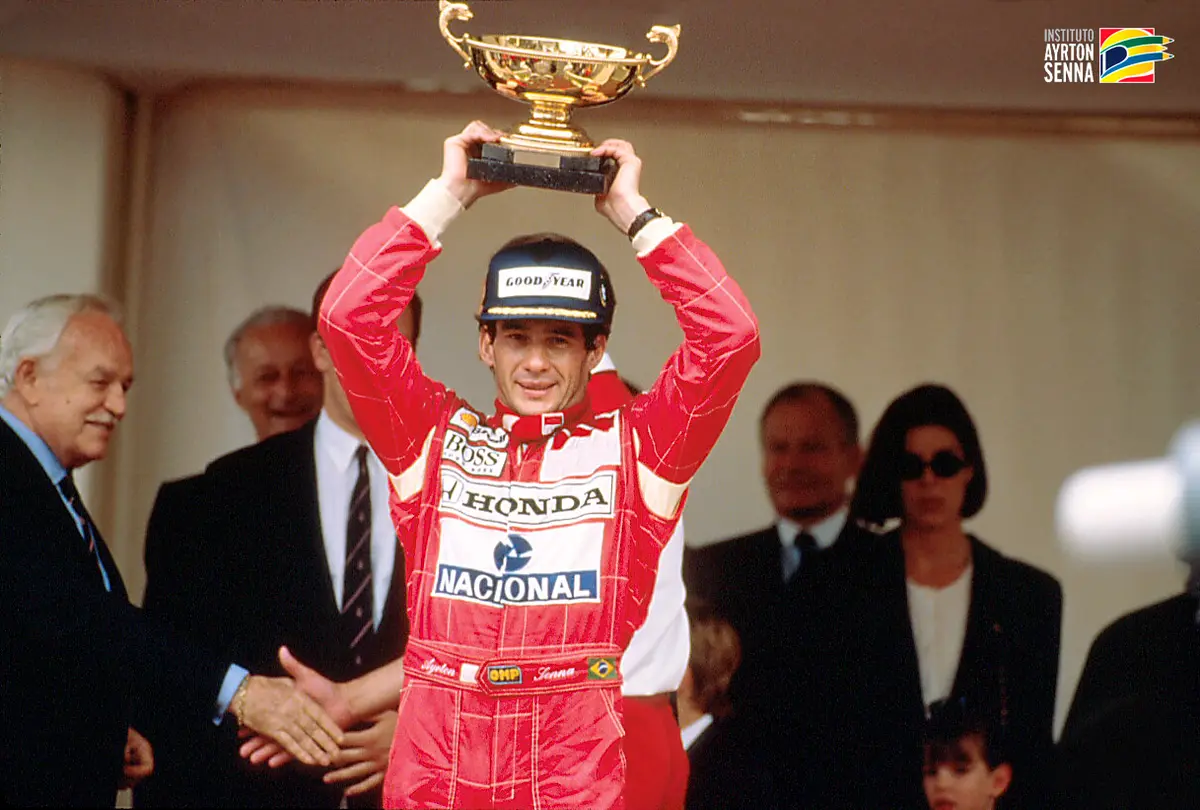
He meets Ayrton Senna in Buenos Aires; the museum says the meeting showed the affection they had for each other. The same year he has an operation to remove a benign tumour of the kidneys, the start of a kidney illness that gets worse.
- 1993
On the island of Sardinia he drives an Alfa Romeo Alfetta 159 in a historic race with aces of his time. The museum says it is the last time he drives a racing car.
- 1995
- 4:10 a.m.
He dies in Buenos Aires at 4.10 in the morning, aged 84, after two days in the Mater Dei clinic with pneumonia and breathing trouble. His body lies in state in the White Room of the Casa Rosada and at the Automóvil Club Argentino, and the next day at the museum in Balcarce, where thousands queue; on the afternoon of 18 July he is buried in the family tomb in the town cemetery, with his parents and brothers, as he wished.
Balcarce, Buenos Aires province: where he was born on 24 June 1911, learnt his trade, built his workshop and lies buried; the Fangio Museum stands on its central square